Monday, March 26, 2018

Cooperation

As we face new existential challenges, successfully making the next evolutionary transition will depend on our ability to increase cooperation in the pursuit of long term goals (new challenges require novel cooperative arrangements).
Cooperation in the world today:

"I believe that we humans, who know so much about cosmology and immunology, lack a framework for thinking about why and how humans cooperate... By necessity, useful new understandings of how humans cooperate and fail to cooperate is an interdisciplinary task. I don't believe that the obvious importance of such an effort guarantees that it will be successfully accomplished. Problems and challenges in everyday life in the home, office, factory, public places and global behavior such as conflict, pollution, resource sustainability are all being addressed with very little comprehensive knowledge about cooperation. In regard to cooperation theory, fragmentary and specialized knowledge is advancing in a dozen or more different fields, but in terms of putting this fragmented knowledge together into a systemic whole, we’re still in the pre-microscope era."
 - Howard Rheingold

"Martin Nowak of Harvard University has identified at least five basic mechanisms of cooperation. He shows the way that we human beings collaborate is as clearly described by mathematics as the descent of the apple that once fell in Newton's garden."
- Roger Highfield

"We are coming very close to an understanding of human cooperation that can generalize to society as a whole. I am hopeful that these breakthroughs may eventually lead us to form a science of human peace and harmony."
- John Gottman, "The Trust Metric"

"For many human reciprocal altruists the anticipated repayment is not necessarily for the person who makes the initial sacrifice or even for their family members. The expectation is that sufficient others will engage in altruistic acts as needed to ensure the well being of those within the boundaries of the given community. The return to such long-sighted reciprocal altruists is the establishment of norms of cooperation that endure beyond the lifetime of any particular altruist."
- Margaret Levi, Reciprocal Altruism

"There is unusually close cooperation in China between government, academia, medicine, education, media, parents, and consumerism in promoting a utopian Han ethno-state." [We can blame China for their trade policies, and we can despise the rising dictatorship of Xi Jinping, but by doing that we may risk ignoring this high level of cooperation that exists in their society. More than anything else this could lead to China's ascendance as the United States sees its role in global politics decline. We in the West look at China and tend to focus on their state controlled media and politics, but the Chinese may be looking at the lack of cooperation in our government and wonder how we can be so backwards.]
- Geoffrey Miller

"We are descended solely from those better equipped with coalitional instincts. In this new world, power shifted from solitary alphas to the effectively coordinated down-alphabet, giving rise to a new, larger landscape of political threat and opportunity: rival groups or factions expanding at your expense or shrinking as a result of your dominance. And so a daunting new augmented reality was neurally kindled, overlying the older individual one. It is important to realize that this reality is constructed by and runs on our coalitional programs and has no independent existence. You are a member of a coalition only if someone (such as you) interprets you as being one, and you are not if no one does."
- John Tooby, Coalition Instincts

"For a social species like us, the benefits of cooperation (and the opportunity costs of its absence) can hardly be overstated."
- Oliver Scott Curry

The evolutionary basis:

"The two fundamental principles of evolution are mutation and natural selection. But evolution is constructive because of cooperation. New levels of organization evolve when the competing units on the lower level begin to cooperate. Cooperation allows specialization and thereby promotes biological diversity. Cooperation is the secret behind the open endedness of the evolutionary process. Perhaps the most remarkable aspect of evolution is its ability to generate cooperation in a competitive world."
- Martin Nowak, "Five rules for the evolution of cooperation"

“A positive-sum game is a scenario in which agents have choices that can improve the lots of both of them at the same time. A classic positive-sum game in everyday life is the exchange of favors, where each person can confer a large benefit to another at a small cost to himself or herself. Examples include primates who remove ticks from each other's backs, hunters who share meat whenever one of them has felled an animal that is too big for him to consume on the spot, and parents who take turns keeping each other's children out of trouble. A key insight of evolutionary psychology is that human cooperation and the social emotions that support it, such as sympathy, trust, gratitude, guilt, and anger, were selected because they allow people to flourish in positive-sum games.” [In Pinker's earlier response to Wright's book Nonzero, he pointed out that "humans do not directly seek wider cooperation and more complex societal organization; they care only about comfort, sex, family, friendship, knowledge, pride, being entertained, and so on. An increase in social complexity is just one way of getting more of these..."]
- Steven Pinker, "The Better Angels of Our Nature"

"The biologists John Maynard Smith and Eörs Szathmáry have argued that an evolutionary dynamic which creates positive-sum games drove the major transitions in the history of life: the emergence of genes, chromosomes, bacteria, cells with nuclei, organisms, sexually reproducing organisms, and animal societies. In each transition, biological agents entered into larger wholes in which they specialized, exchanged benefits, and developed safeguards to prevent one from exploiting the rest to the detriment of the whole." [Nonzero sum cooperative relationships lead to emergent qualities; the whole is greater than the sum of its parts.]
- Steven Pinker, "Positive-Sum Games"

"The evolution of cooperation and helping behaviour is a beautiful and simple explanation of how nature got complex, diverse and wonderful. It's not restricted to the charismatic meerkats, or fluffy bumble-bees. It is a general phenomenon which generates the biological hierarchies that characterise the natural world. Groups of individuals (genes, prokaryotes, single-celled and multicellular organisms) that could previously replicate independently, form a new, collective individual that can only replicate as a whole."
- Seirian Sumner

"It is the selective advantages arising from various synergistic effects that constitute the underlying cause of the apparently orthogenetic (or directional) aspect of evolutionary history, that is, the progressive emergence of complex, hierarchically organized systems."
- Peter Corning, "The Synergism Hypothesis," 1983

Cooperative interactions of various kinds, however they may occur, can produce novel combined effects - synergies - that in turn become causes of differential selection. In effect, the parts (genes, genomes, individuals, groups, or even species) that are responsible for producing the synergies may become interdependent “units” of evolutionary change. It applies both to biological and socio-economic evolution, most notably in humankind. This functional synergy is the underlying cause of cooperation, and complexity, in living systems.
- Peter Corning and Eörs Szathmáry, "Synergistic Selection": A Darwinian frame for the evolution of complexity. 2015

The next major transition in evolution must sustain and enhance our interdependent “collective survival enterprise.” In the final reckoning, if our species fails to meet this great survival challenge, we will squander our evolutionary inheritance and betray what untold generations of our ancestors struggled to achieve over millions of years.
- Peter Corning, Synergistic Selection

"Many neural sub-systems cooperate to maintain a unified and coherent field of conscious experience, sustaining the experiences we typically have as humans."
- Barry C. Smith

"Cancer is widespread among multicellular organisms, afflicting mammals, birds, fish and reptiles. It clearly has deep evolutionary roots, probably stretching back over a billion years to the dawn of multicellularity. Indeed, it represents a breakdown of multi-celled cooperation."
- Paul Davies, "Somatic Mutation Theory of Cancer"

"A cell can work only with standardized building blocks (amino acids, carbohydrates, DNA, RNA, etc.). Could something as complex as a cell ever work outside of standards? Further up the chain, in biology, the question is how to get huge numbers of unrelated individuals to cooperate flexibly. I suggest that standardization is at least part of the solution. People can cooperate in ample numbers without standards though all the known mechanisms. But, eventually, groups that use standards, for example of language (writing), value (money), and weights, outpace groups that do not." [That the US has refused the metric system may be more consequential than generally appreciated.]
- Rolf Dobelli, "General Standardization Theory"

"One struggles to think of a greater contribution to world cooperation than progress to universal communication. But automated, near-universal translation is coming. And it will change everything."
- Daniel L. Everett

"Humans were different. They didn’t just forage for information; they domesticated it, just as early farmers domesticated the land, rivers, plants and animals that surrounded them. Like farming, domesticating information was a collective project."
- David Christian, "The Noösphere"

"The metadiscipline of synoetics studies the cooperative interaction of people, mechanisms, plant or animal organisms, and automata into a system whose mental power is greater than that of its components. It presents a picture of the integrated way in which many currently separate disciplines should be developed and taught to do justice to their mutual roles."
- Louis Fein, "The Computer-Related Science (Synnoetics) at a University in the Year 1975," unpublished paper (December 1960)

"I coined the term synoesis, parallel to symbiosis, and synoetic system, parallel to symbiotic system. I then decided that what we are really dealing with, typically nowadays, is not computer science - we do that as a branch of a much broader science which deals not only with individual entities having mental capabilities like a person or a computer but also deals with synoetic relationships between them." [This sounds similar to what Rachel Armstrong and others are researching today.]
- Louis Fein interview, 1979

Reasons for concern:

"Global human cooperation now teeters on a threshold. The accelerating wealth and industry of Earth's increasing inhabitants - itself a triumph of cooperation - is exhausting the ability of our home planet to support us all. Many problems that challenge us today can be traced back to a profound tension between what is good and desirable for society as a whole and what is good and desirable for an individual. That conflict can be found in global problems such as climate change, pollution, resource depletion, poverty, hunger, and overpopulation." [Collusion and corruption are another type of cooperation - a secret or illegal cooperation - to gain additional profit at other's expense. So one can see that cooperation is itself a part of competition, and where there are competing interests, those who are best able to form "countervailing powers," to use Kenneth Galbraith's term, will have a better chance at success.]
- Roger Highfield

"If we can create institutions and infrastructure to support truthful communication without costly signalling, the world will become a much more efficient place."
- Steve Omohundro, Costly Signalling

"In the artificial lulls when atavism is forced into abeyance we are happy to forget Hobbes’s admonition that it is only through the careful cultivation of institutions that stable peace is at least possible."
- Timothy Taylor

"Deception commends itself, perhaps even above violence, as the principal enemy of human cooperation."
- Sam Harris

"Perhaps our core problem today is that, though we are well evolved to cooperate in groups the size of hunter-gatherer clans (dozens or hundreds of people), we struggle to organize ourselves well at larger scales."
- David Grinspoon, Earth in Human Hands

"We don’t know how cooperation works when you go from small groups of people to a planetary level. We lack the knowledge for successful intervention. We come to this problem at crunch time with empty hands. We should worry about that."
- Daniel Haun

"Cooperation in societies is not always for the good: you can find cartels of anti-social people who don’t care at all for the common good and prefer to cooperate for keeping a status quo that suits them even if the collective outcome is a mediocre result."
- Gloria Origgi, "How To Be Bad Together: Antisocial Punishment of Pro-social Cooperators"

"Homophily lies at the root of many social and economic problems, and understanding it can help us better address the many issues that societies around the globe face, from inequality and immobility, to political polarization."
- Matthew O. Jackson, Homophily

"If we are trying to build an enduring and encompassing ethical society, tight boundaries around deserving beneficiaries of altruistic acts becomes problematic. If we accept such boundaries, we are quickly in the realm of wars and terrorism in which some populations are considered non-deserving of beneficence."
- Margaret Levi, Reciprocal Altruism
Case study among the Pirahã:

"What is there to learn? Let me give some examples from my own field research among Amazonian peoples.

Cooperation: I once thought it might be fun to teach the Pirahã people about Western games. So I organized a 'field day', with a tug of war, a foot race, and a sack race, among other things. In the foot race, one Pirahã fellow got out in front of everyone else. He then stopped and waited for all the others to catch up so they could cross together. The idea of winning was not only novel but unappealing. We cross the line together or I don't cross it. And the same went for the sack race. The tug of war contest was a joke — just guys keeping the slack out of the rope talking. The people loved it all, laughing and conversing all day and told me they had a good time. They taught me more than I ever taught them: you can have a great time and have everyone win. That is not a bad lesson. That is a fine lesson.

Pluralism: The Pirahãs, like the Narragansett and other American Indians, believe that you use your knowledge to serve yourself and to serve others in your community. There is no over-arching concept of Truth to which all members of society must conform.

Communalism: The Pirahãs seem to accept only knowledge that helps, not knowledge that coerces. Think of our English expression 'knowledge is power'. The concept as practiced in most industrial societies is really that 'knowledge is power for me so long as I have it and you don't'. But to many peoples like the Pirahãs, knowledge is something for us all to share. It is power to the people, not power to a person. The Pirahãs don't allow top secret conversations. Every member of their society knows what every other member is doing and how they are doing it. There is a communal mind. There is freedom and security in group knowledge.

Toleration: In Western society we associate tolerance with education — the more you learn, the more you tolerate. But there is little evidence for this thesis when we look at our society as a whole (where education is even compatible with religious fundamentalism, one of the worst dangers for the future of our species). Yet among some hunter-gatherer societies, toleration of physical, mental, and religious diversity can be much greater than our so-called pluralistic Western societies. Not everyone has to look alike, act alike, behave alike, or believe alike. In fact, they don't even have to pretend to do so.

I am optimistic that we will learn the simple and useful truths of cooperation, pluralism, communalism, and toleration and that no one Idea or Truth should be the ring to bind us all."
- Daniel L. Everett
Future prospects for cooperative engagement:

"Non-zero-sum games have always been part of life. You have them in hunter-gatherer societies, but then through technological evolution, new forms of technology arise that facilitate or encourage the playing of non-zero-sum games, involving more people over larger territory. Social structure adapts to accommodate this possibility and to harness this productive potential. ...I think we're going to have to have a major round of moral progress in the world. I think you're just going to have to see less hatred among groups, less bigotry, and, you know, racial groups, religious groups, whatever. There's going to have to be moral progress. There's going to have to be a lessening of the amount of hatred in the world, given how dangerous it's becoming. ...Now, social organization has reached the global level ...we've come too far to screw it up now."

"We can apply the modern AI technique of deep multi-agent reinforcement learning to age-old questions in social science such as the mystery of the emergence of cooperation. As a consequence, we may be able to better understand complex multi-agent systems such as the economy, traffic systems, or the ecological health of our planet - all of which depend on our continued cooperation." [Game theory is described as “the study of mathematical models of conflict and cooperation between intelligent rational decision-makers.” The use of AI to study cooperation is an ideal application.]
- DeepMind

"Are there long-term trends we could feel optimistic about? Thirty years of work on the evolutionary trajectory of cooperative strategies suggest long-term trends (under a broad range of conditions) toward greater cooperation, contingent on ever more sophisticated discrimination. It seems likely that when similar models are produced for varying degrees of deceit and self-deception, long-term trends toward honesty to others and self will (at least under some conditions) be favored. Is there any reason to believe that we will survive long enough to enjoy any of these long-term trends? This is far less certain. Evolution does not plan for contingencies that have not yet occurred and the vast majority of species go extinct. There is no reason to expect humans are exempt from these rules."
- Robert Trivers

"Given the history of human society in cooperatively plundering the resources of a meager but beautiful planet with currently abundant resources, who can possibly be optimistic about the long-term future of humanity?"
- George Smoot

"Remember this if you are ever tempted to write off all humanity as a lost cause. We have our flaws, without a doubt, but we can also lay claim to being the species shaped by evolution to possess the most open hearts and the most abundant capacity for care on earth."
- Abigail Marsh


Keywords: cooperation, emergence, evolution, game theory, interdependence, nonzero, reciprocity, symbiosis

Additional resources:
Corning, Peter. 2018. Synergistic Selection. (more by this author)
Moss, Gordon. 2011. The Dawning Age of Cooperation
Nowak, Martin. 2011. The Evolution of Cooperation.
Wright, Robert. 2000. Nonzero.

 Additional quotes (uncategorized):

"The only thing that will redeem mankind is co-operation."
- Bertrand Russell, "Human Society in Ethics and Politics" (1954) p212

"My argument, stated generally and briefly, is that the driving force in nature, on this kind of planet with this sort of biosphere, is cooperation."
- Lewis Thomas, The Fragile Species

"Every kingdom divided against itself will be ruined, and every city or household divided against itself will not stand."
- Matthew 12:25

"We must, indeed, all hang together or, most assuredly, we shall all hang separately."
- Benjamin Franklin

"The whole is greater than the sum of its parts."
- Aristotle

"Knowledge comes by taking things apart: analysis. But wisdom comes by putting things together."
- John A. Morrison

"When spiderwebs unite, they can tie up a lion."
- African Proverb

In a world increasingly connected not just by trade in goods but also by the exchange of violence, information, viruses, and emissions, the importance of social preferences [such as a concern for the well-being of others and for fair procedures] in underwriting human cooperation, even survival, may now be greater...
- Samuel Bowles and Herbert Gintis, A Cooperative Species: Human Reciprocity and It's Evolution

Although relentless competitive natural selection is widely assumed to be the primary mover of evolutionary change, life more generally works on the basis of cooperation. The focus on competition and cooperation is largely an artifact of the compression of time ― a distortion that dissolves when the nature and origins of adapted life are viewed primarily from developmental and evolutionary time scales.
- Kenneth Weiss and Anne Buchanan, The Mermaid's Tale

John Maynard Smith and Eörs Szathmáry in "The Major Transitions in Evolution" wrote that the inculcation of proper behavior is often achieved by ritual and myth. (272) So that "throughout their lives, in speech, story, and song, all people sing the same tune" (Plato, Laws). To see an example of this, John Miller in his book, "A Crude Look at the Whole" writes that on the island of Bali, the need for coordinated cropping by farmers opened up "a niche for an elaborate religious institution with various shrines and temples tied to the irrigation systems." Balinese rice farming is an example of system wide cooperation leading to centuries of sustainable agriculture.

Monday, March 12, 2018

Our evolving planet

Image Credit: György Soponyai
In "The Ancestor's Tale: A Pilgrimage to the Dawn of Evolution," Richard Dawkins wrote “Evolution, or its driving engine natural selection, has no foresight... Survival in future centuries doesn’t enter into the calculation.” While it may be true that genetic evolution doesn't anticipate changes that may occur in future centuries, it has succeeded in creating minds that can do this very thing. Humans are capable of using foresight to look centuries ahead, and if we are concerned about the future of humanity and our planet, we have to think in the long term.

Koert van Mensvoort's Letter to Humanity: "Nature always builds on existing levels of complexity: biology builds upon chemistry, cognition builds upon biology, calculation builds upon cognition. I can’t think of another species whose presence has sparked an entirely new evolutionary phase, just as DNA evolved from RNA, your actions have made possible a leap to non-genetic evolution. ...Although this wasn’t a conscious act, the consequences are no lesser for it. Your presence has transformed the face of the earth so fundamentally that the impact will still be visible millions of years from now. This is your doing, but as yet, you barely seem to realise that, much less have you been able to take a clear position toward it."

Eörs Szathmáry, in his paper "Toward Major Evolutioary Transitions Theory 2.0," wrote: "Human society with language has been, and it still is, the last item on the list. We see key elements that are highlighted in other transitions: cooperation (including reproductive leveling and food sharing), a form of eusociality, a powerful novel inheritance system, and living in groups. ...It is the cultural traditions, language, rules and laws that are the cohesiveness-maintaining mechanisms that integrate the ‘cultural individual.' ...Biology gives room to technological and communal cultural evolution. Can we predict, by looking at an evolving population, that a major transition is “imminent”? ...Transition theory strongly suggests that, if we see, even in rudimentary form, that originally independently reproducing units join, somehow use functional synergies among the units, and that there is some novelty in the inheritance system as well, then the population is definitely on its way to a “major transition.”

Kevin Kelly wrote: "Another way to view these transitions is as increased levels or varieties of cooperation. We can see where evolution is going by imagining a next phase which will increase the span of cooperation further. That of course, would be the ninth transition." Kelly sees a clear trend in the direction of evolution.

Gillings, Hilbert, and Kemp in their paper "Information in the Biosphere: Biological and Digital Worlds" write: "It seems inevitable that digital and biological information will become more integrated in the future. This scenario raises the question of  how such an organic-digital fusion might become a symbiosis that co-evolves through natural and artificial selection. Both could contribute their functions to generate a higher unit of organization, similar in effect to previous evolutionary transitions. We argue that the carbon-based biosphere has generated a cognitive system (humans) capable of creating technology that is resulting in a major evolutionary transition that merges technology, biology, and society. Scholars of ecology and evolution should join the debate, and seriously and systematically think about the consequences of digital information for the trajectory of life. 

Where will this "ninth transition" take us? Karl Schroeder has one idea: "I've lately been trumpeting my revision of Clarke's Law (which originally said 'any sufficiently advanced technology is indistinguishable from magic'). My revision says that any sufficiently advanced technology is indistinguishable from Nature. ...If the Fermi Paradox is a profound question, then this answer is equally profound. It amounts to saying that the universe provides us with a picture of the ultimate end-point of technological development. In the Great Silence, we see the future of technology, and it lies in achieving greater and greater efficiencies, until our machines approach the thermodynamic equilibria of their environment, and our economics is replaced by an ecology where nothing is wasted. After all, SETI is essentially a search for technological waste products: waste heat, waste light, waste electromagnetic signals. We merely have to posit that successful civilizations don't produce such waste, and the failure of SETI is explained. ...Basically, either advanced alien civilizations don't exist, or we can't see them because they are indistinguishable from natural systems. I vote for the latter."

About this, Kevin Kelly writes: "His theory suggest that what technology wants is to be “natural,” not just biologically natural, but geologically natural, or like self-regulating Gaia, natural on a planetary scale. I didn’t quite reach that far in my book, so I am glad to have been pushed even further by Schroeder." Kelly did however extensively describe "convivial technology" which, as he wrote, "converges around the dozen or so dynamics (such as cooperation, transparency, decentralization, flexibility, redundancy, and efficiency) common to all exotropic systems including life itself.

Lynn Margulis is well known for her many contributions, including endosymbiosis theory and, with James Lovelock, the Gaia hypothesis. In her book "What is Life?" the ideas of Vernadsky are discussed, and these same ideas are brought up in Grinspoon's book "Earth in Human Hands." In particular, it is Vernadsky's conception of the noösphere. Vernadsky had developed the concept of the biosphere in the late 1920s, and was recognized by Lovelock and Margulis as a seminal contributor to the theory of Earth as a living system. As Grinspoon wrote, “In other words, fifty years before Lovelock and Margulis, Vernadsky largely described Gaia." Grinspoon goes on: "Furthermore, he hinted at a fundamentally new stage in the life of the biosphere that was being brought about by the actions of humanity. In his later life he became obsessed with the idea of the noösphere. …The lithosphere had given rise to the biosphere, and now the biosphere had birthed the noösphere. Earth had become alive and then developed a mind. ...the beginning of Earth’s fifth eon [Hadean, Archean, Proterozoic, Phanerozoic, Sapiezoic].” Grinspoon suggested calling this eon the Sapiezoic: "I've argued that one way to approach the question "What is Life?" might be to think of it as a property that a planet sometimes takes on. Similarly, mind may be a phenomenon that sometimes can become a property of a planet. If planets can have Sapiezoic Eons, then there is a form of stable intelligence, manifested on some worlds, that has not quite yet appeared on Earth." This has resulted in dramatic changes to our planet, as we are coming to realize. "With the Copernican Revolution, we had to completely reevaluate our place in the scheme of things. Now we are awakening to our role as world shapers, and this will require another painful shift in worldview."

David Grinspoon: "The Anthropocene could mark the beginning of a transition [to a sapient planet]... If we make it past the next few centuries, it will be because we've honed our survival skills to make them work on a planetary scale. Once we achieve that, we have done much more than ensure our persistence against near-term self-induced challenges. We will have unleashed the power of reason and foresight in defense of Earth's biosphere - but first we have to get through a bottleneck." Foresight... but how do we apply it? Grinspoon asks "in analogy to our new understanding of human health, rather than assuming we're the disease, can we seek to play the balanced and mutually beneficial role that would make us part of the commensal microbiome of Gaia? ...We are a kind of organism that has never existed before, and we’ve gotten ourselves in a situation. Fortunately, we may be equipped to get ourselves out of it. A plague does not think. A cancer does not decide to change course. We could. So these images may describe our past, but they needn’t proscribe our future. People are in great need of some larger perspective. We need to have a long-term vision of where we want to go to help us through this time of alarming short-term threat. ...We have, unconsciously, been making a new planet. Our challenge now is to awaken to this role and grow into it, becoming conscious shapers of our world."

In the history of ideas, we have progressively eliminated discontinuities from our perception. Copernicus eliminated the discontinuity between the terrestrial world and the rest of the physical universe. Darwin eliminated the physical discontinuity between human beings and the rest of the organic world, and psychologists have shown the continuity between the human and animal mind. We are crossing another discontinuity as we explore the unified quality of nature and artifice. All things, biological, societal, and technological, adapt to and create each other, and at the same time weave into one whole system. Kelly went so far as to suggest a redefinition of life as self generated information systems, a theme echoed by Max Tegmark, both of whom have suggested including non-genetically evolved agents within the definition of life. A view that has been maintained since Sir Francis Bacon wrote "Advancement of Learning," in 1605: "The history of the arts should the rather make a species of natural history, because of the prevalent opinion, as if art were a different thing from nature, and things natural different from things artificial, [however] artificial things differ not from natural in form or essence. [1]"

Rachel Armstrong agrees that the duality of nature/artifice is insupportable: "The nature of humanity in the twenty-first century is, according to sociologist Steve Fuller, a ‘bipolar disorder’ beset with dualisms of identification such as divine/animal, mind/body, nature/artifice and individual/social. We currently view the world in dualistic terms where those that are ascribed the status of being ‘alive’ act and those that do not have this status remain quiet and do not participate. My ecological engagement with architecture aims to engage a spectrum of materials and ecologies that participate as a whole, even if some of their agencies are not bestowed with the status of ‘life’. The importance of each agent (living or non-living) participating in vital networks of interaction becomes shaped by the impact of the agent on the society. Living technologies provide a more Romantic kind of interaction in the syntheses of experience and bring new challenges to the design and engineering portfolios, as they possess agency, need sustenance, have a will of their own, and change with time. It is impossible to deduce all biological outcomes computationally, as the outputs are often unpredictable and surprising."

Armstrong: "We have the power to shape our own technological evolution – even if we use ‘soft’ control to direct the outcomes. One of the really interesting things about having many different practices, paradigms and different kinds of solving approaches through technology, is that we are increasing our ability to remain fluid and adaptive to change. We are definitely going to need resilience and adaptability as key drivers of human development in this century, if the predictions of an unstable earth and rapid increase in the number of people on the planet are correct. In facing these significant challenges we need to not just consider the amount of ‘life’ that we can support but invest in ensuring a good quality of life. A healthy relationship with technology may help us achieve this as I view technology as being the way that our minds are embodied in the process of problem solving. As this century unfolds, Nature will increasingly be the challenge that we need to address – so there will be an even tighter coupling between technology and the natural world than already exists." Instead of five- or even 10-year increments, Armstrong asks us to look up to 100 years into the future. She calls this "black sky thinking." 

"What is most interesting about synthetic biology and living technologies is that politically they represent the fusion of nature and machine, which is an interesting eventuality for Marxism and socialism and the idea that humans perform best when working ‘in a state of nature’. And if the ideological left can embrace the potential of synthetic biology and living technology as allies in the means of production then perhaps a real strategy to counter capitalism and its exclusive, destructive hierarchies, is possible. In the built environment we have a clash of infrastructures between the rigid mechanical infrastructures of modern architecture and the flexible networks of the natural world. My research takes a bottom-up approach to how to best use materials to engage the intersections of these spaces. As such, the process itself is symbiotic not a totalitarian invasion or razing to the ground of what already exists but takes a strategic approach in which new structures are wrapped around old ones, rather like biological evolution itself."

Paraphrasing Armstrong again: "Resources that have taken geological timescales to accrue at the fertile interface between the earth’s molten iron core and its atmosphere — our seas and soils — are now being rapidly stripped through geological scale industrial practices such as mining, deforestation, over-fishing and ocean pollution. Working with nature means taking stewardship of an extended network of influence in our world, which needs to be maintained by reinforcement — through technologies, human interaction, and the participation of non-human agents such as bacteria and synthetic biologies. At the start of the twenty-first century a set of conditions facilitated through the complex networks embodied in the digital age is prompting the emergence of a new paradigm, The Age of Complexity, which more colloquially can be thought of as an Ecological Paradigm. Nanotechnology, Biology, Information Science and Cognitive Technologies are research fields that possess the kinds of qualities that could result in disruptive innovation. Human development is now enabled to synergistically evolve with the biosphere and help us coauthor an ecologically engaged future. Influence by engagement rather than through control. Nature will always be a potent force that can overwhelm us so our task in a living culture of materiality will be to remain engaged and ‘conversant’ with those agencies that we rely on."


Keywords: agency, biology, cooperation, duality, ecology, embodiment, engagement, evolution, foresight, life, stewardship, symbiosis, synthetic, technology

[1] The topic of dualisms was also brought up in the famous saying of Ch'ing-yüan Wei-hsin (Seigen Ishin): 
老僧三十年前未參 禪時、見山是山、見水是水、及至後 夾 親見知識、有箇入處、見山不是山、見水不是水、而今得箇體歇處、依然見山 秪 是 山、見水 秪 是水
Translated: "Before I had studied Zen for thirty years, I saw mountains as mountains, and waters as waters. When I arrived at a more intimate knowledge, I came to the point where I saw that mountains are not mountains, and waters are not waters. But now that I have got its very substance I am at rest. For it's just that I see mountains once again as mountains, and waters once again as waters."
(Alan Watts, The Way of Zen, New York, Pantheon Books, 1951, p. 126, 220 k)

Friday, February 9, 2018

The Planetary Context

Story #1: Learning to share control

Human history has three main players: humans, the environment, and technology. In prehistory the locus of control resided entirely in the external environment, and this permitted a natural circular economy with a balanced carbon cycle to be maintained. But the start of the Industrial Revolution allowed us to use new technologies to take greater control of our environment. This broke the natural circular economy and altered the carbon cycle - we did not know how to effectively handle the waste products of civilization. Today we are beginning to see new ways to close the loop again with the creation of more intelligent systems that augment natural feedback loops and substitute computing power for raw materials. So we can return to a circular economy... but it won't be the circular economy we knew before the Industrial Revolution. 

Maurice Conti described this new circular economy: "If this is the future, the Augmented Age, what will that look like? I think we're going to see a world where we're moving from things that are fabricated to things that are farmed. Where we're moving from things that are constructed to that which is grown. We're going to move from being isolated to being connected. And we'll move away from extraction to embrace aggregation. I also think we'll shift from craving obedience from our things to valuing autonomy." Autonomy implies sharing control, and in this context sharing control with proactive AI systems. Why should we do that? Because the task of restoring a circular economy is too big for us to do unaided.

Giulio Boccaletti, physicist and atmospheric and ocean scientist: "One area where the convergence of need, urgency, and opportunity is great is in the monitoring and management of our planetary resources. Despite the dramatic increase in cognitive and labor productivity, we have not fundamentally changed our relationship to Earth: we are still stripping it of its resources to manufacture goods that turn to waste relatively quickly, with essentially zero end-of-life value to us. A linear economy on a finite planet, with seven billion people aspiring to become consumers — our relationship to the planet is arguably more productive, but not much more intelligent than it was a hundred years ago. Understanding what the planet is doing in response, and managing our behavior accordingly, is a complicated problem, whose solution is hindered by colossal amounts of imperfect information. From climate change, to water availability, to the management of ocean resources, to the interactions between ecosystems and working landscapes, our computational approaches are often inadequate to conduct the exploratory analyses required to understand what is happening, to process the exponentially growing amount of data about the world we inhabit, and to generate and test theories of how we might do things differently."

No, we're not doing things much differently than we did a hundred years ago, but at the same time we won't willingly return to our pre-industrial past. What is needed is a sustainably managed closed loop industrial ecology. Proactive AI systems capable of generating actionable intelligence can help synchronize interactions at the individual, social, and environmental levels and restore a circular economy. There are many examples of how this is happening, but that's another story...

Story #2: Gaining a planetary perspective

In his 2010 book "Eaarth," Bill McKibben described how humans have fundamentally changed the planet. There's the familiar concept of "planetary boundaries" that Johan Rockström has described. And the work of Carl Sagan, while associated most frequently with astronomy, has a lot more to say about the care of our planet than is generally assumed. Some of his greatest contributions were in defining our relationship to the planet as a whole. Wallace Broecker and Charles Langmuir, in the 2012 edition of "How to Build a Habitable Planet," echoed Sagan. And more recently in late 2016, astrobiologist David Grinspoon wrote "Earth in Human Hands," a book devoted to describing how we have been unconsciously making a new planet, but now we are discovering our new role as conscious shapers of our world. Grinspoon's book is probably the single best resource for explaining the context in which all of these anticipated future changes will occur.

Here's a very simple, and highly speculative chart outlining past, current, and future epochs. These are identified using the provisional labels of Holocene, Anthropocene, and Sapiezoic (although pre-industrial, industrial, and post-industrial might've worked as well). Each epoch is described in two ways - the material and energy flows, and the "control mix" that best characterize it. The material and energy flow charts lack detail and are simply intended to show how manufactured goods during the anthropocene primarily remain as accumulated waste after their use, while waste and other materials during the Holocene was produced in smaller quantities and quickly decomposed, and waste during the Sapiezoic will be treated to maintain utility throughout the entire material/product lifecycle.

The control mix graphs similarly lack detail or scale, but are intended to show how small human and AI disturbances, to otherwise relatively stable environmental conditions, can affect large scale conditions. During the Holocene those disturbances were relatively negligible, though nonetheless contributed to the extinction of many megafauna species. During the Anthropocene the human population exploded, the environment was dramatically altered, and biological diversity threatened still further. During the Sapiezoic symbiotic artificial intelligences (or any new cultural developments yeilding positive synergistic effects) could help us regain control over these unintended environmental externalities, close material and energy loops, and create industrial ecologies capable of enhancing environmental services, integrating large amounts of information in the process.

As Luca De Biase explains, artificial intelligence can help humans understand externalities (in many cases already has) and that will challenge their civilizations. At the same time, per Maurice Conti, we are shifting from craving obedience from our things to valuing autonomy - and that is what will allow civilizations to meet the challenge of handling these unintended externalities. ...This is a planetary perspective with shared control, it expands our understanding and ability.

Story #3: Terra Sapiens

Traditional notions of time, space, and agency have been extended beyond the outer edge of our experience. We are re-inventing ourselves, again.

Online Resources:

https://aeon.co/essays/enter-the-sapiezoic-a-new-aeon-of-self-aware-global-change
http://info.gravyty.com/blog/not-just-ai-proactive-ai
https://www.youtube.com/watch?v=CmICwmT-BHA (Andrew Lo's TEDx video, "Hacking Humanity")
https://cleantechnica.com/2018/01/21/face-ai-enabled-machines-cooperate-better-humans-tests/
http://longnow.org/seminars/02017/sep/06/earth-human-hands/
https://www.washingtonpost.com/news/speaking-of-science/wp/2016/12/06/were-at-the-controls-on-planet-earth-but-were-not-in-control/
https://www.hollywoodsoapbox.com/?p=16983
http://www.slate.com/articles/technology/future_tense/2016/12/negative_thinking_about_climate_change_is_dangerous.html

Notable writers/thinkers on future topics:

Rachel Armstrong
Koert van Mensvoort
Karl Schroeder
Eors Szathmary
Sir Francis Bacon
David Channell
Bruce Mazlish
Beatrix Murrell
Teilhard de Chardin
Kevin Kelly
Lynn Margulis
Vladimir Vernadsky
David Grinspoon
Carl Sagan
Wallace Broecker
Maurice Conti

Thursday, June 15, 2017

A Circular Economy in Alaska

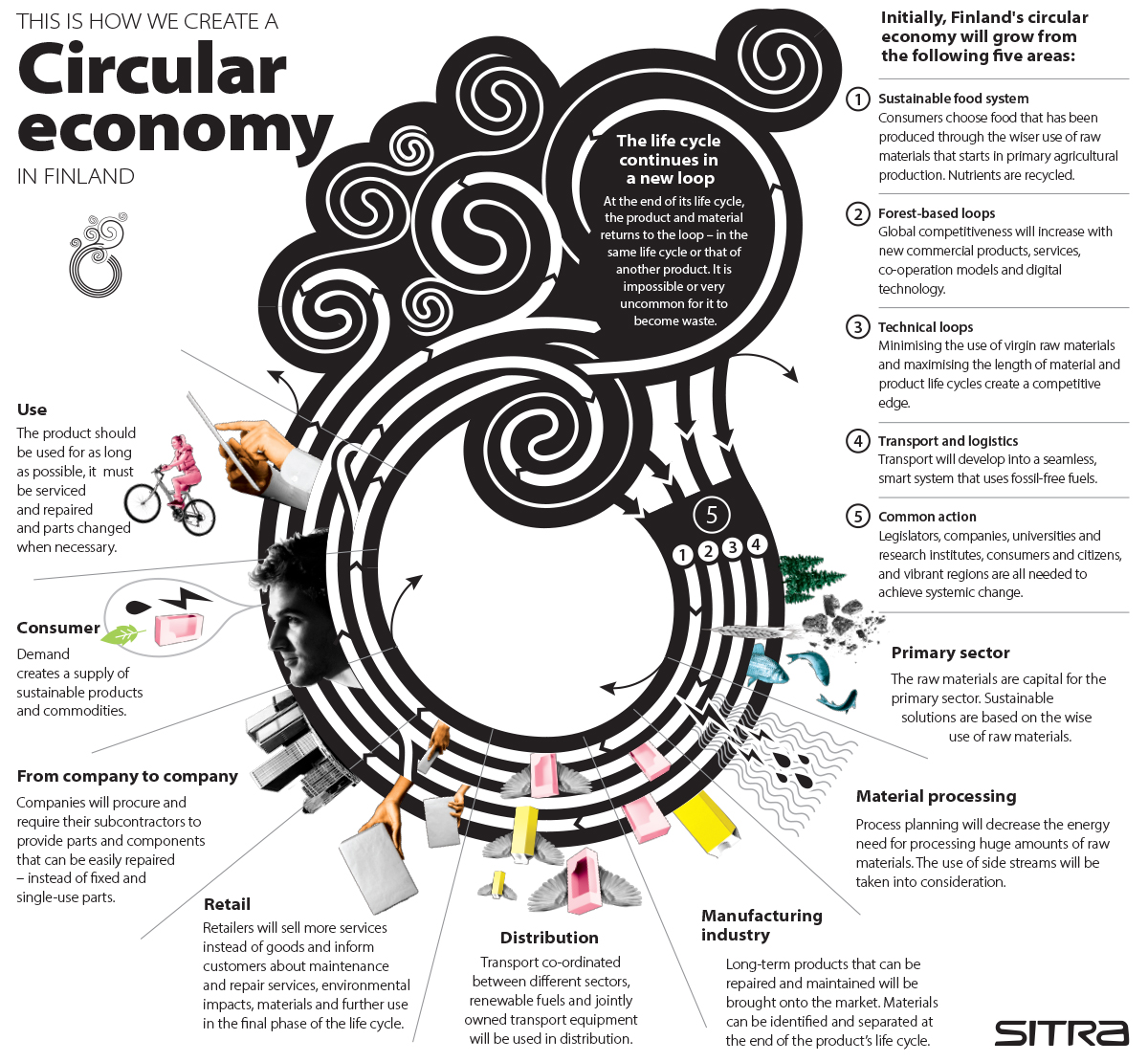
The circular economy is an approach that takes insights from living systems. It considers that our systems should work like organisms, processing nutrients that can be fed back into the cycle — whether biological or technical — hence the "closed loop" or "regenerative" terms usually associated with it. Why do we need a circular economy? Updating Aldo Leopold's "standard paradox of the twentieth century," which he wrote about in 1938, Giulio Boccaletti succinctly describes the problem we face today essentially unchanged:
Despite the dramatic increase in cognitive and labor productivity, we have not fundamentally changed our relationship to Earth: we are still stripping it of its resources to manufacture goods that turn to waste relatively quickly, with essentially zero end-of-life value to us. A linear economy on a finite planet, with seven billion people aspiring to become consumers—our relationship to the planet is arguably more productive, but not much more intelligent than it was a hundred years ago.
Walter Stahel wrote an article for Nature about how to construct a circular economy, in which he offered valuable policy suggestions, including rewarding the internalization of external costs, and proposes that "stewardship should overrule ownership and its right to destroy." A few technical obstacles were also addressed: "To close the recovery loop we will need new technologies to de-polymerize, de-alloy, de-laminate, de-vulcanize and de-coat materials." In a closed-loop circular economy, one of the goals is to recycle atoms, something we already do for metals. We are all familiar with recycling, but recycling is just the 'outer circle' of the circular economy, requiring more energy input than the 'inner circles' of repair, reuse and remanufacture. This highlights another goal of the circular economy - it's not just about designing for better end-of-life recovery, but also minimizing energy use. As Chris Anderson said, "This notion of closing the loop everywhere is perhaps the biggest endeavor of our age." In fact, it may be possible to view all work as attempting to "close the loop." Ken Webster elaborates on this by describing how the digital revolution* helped enable the circular economy:
The circular economy is built on a feedback-rich systems perspective. This perspective was born out of computing [though certainly not exclusive to it]. The "circular" in circular economy is a cipher for feedback, for closing the loop, but revealed in the light of the economy being part of an open system — bathed in the energy from the sun — and where decay and disorder are every bit a reality as regeneration and restoration.

The additional materials and energy related feedback loops illustrated so often in the circular economy “butterfly” diagram can be seen as a reflection of the possibilities emerging from this digital revolution. The feedback loops have long existed, yet before the digital revolution, they were relatively underdeveloped in a modern economy, swamped by throughput (the amount of material or items passing through a system or process). These loops are now revitalized, perhaps even transformed (or they will be!) The potential for business models around products of service, the sharing economy, product life extension and reuse, repair and reverse supply chains lies with what digital feedback does to disrupt the old relationships. Perhaps this mix of convergent technologies with an associated worldview is some sort of sign of a renaissance for our times.
As Michael Liebreich says, we will be able to find value where it did not exist before. This is a crucial concern for Alaska as we face an inevitable economic transition. We can learn from the World Circular Economy Forum held in Finland this month. From the description: "This ground-breaking event presents the world’s best circular economy solutions and gathers together the most recognized experts and decision makers in the field. 1,500 key people from more than 100 countries shared ideas in Helsinki, Finland, on 5-7 June 2017, at the first ever World Circular Economy Forum." Other innovators and thinkers have described the transition to a circular economy as one full of new possibilities:
"Like all major transitions in human history, the shift from a linear to a circular economy will be a tumultuous one. It will feature pioneers and naysayers, victories and setbacks. But, if businesses, governments, and consumers each do their part, the evolution of innovative business models and closed-loop concepts like remanufacturing, refurbishing and parts harvesting, will put the global economy on a path of sustainable growth. Many years from now, people will look back on it as a revolution." - Frans van Houten, CEO, Royal Philips

"Materials and components within a circular economy are designed for cycling through the economy many times, creating both new value opportunities and an eradication of waste (or system losses). Partnering this with the adoption of renewable energy generation produces a more robust and resilient operating model. Remanufacturing and refurbishment are in themselves not new concepts, but they have the potential to be game changing when deployed in conjunction with new business models, often enabled by information technologies." - Jamie Butterworth

“Human beings don’t have a pollution problem; they have a design problem. If humans were to devise products, tools, furniture, homes, factories, and cities more intelligently from the start, they wouldn’t even need to think in terms of waste, or contamination, or scarcity. Good design would allow for abundance, endless reuse, and pleasure.” - Michael Braungart and William McDonough

"If a CE is accepted as a theoretical ideal, it can be used as a benchmark to measure “progress” on a scale ranging from linear at one end to perfectly circular at the other. This scale must consider the loss of both material quantity and material quality. If such a metric were to be applied to our current industrial system—particularly upstream energy-intensive process industries—we can ask: What is the current degree of circularity? And, how far could we realistically move toward perfect circularity?" - Jonathan Cullen

It is important to determine the current state of circularity so that one can have a benchmark against which to track improvements or see the effect of individual or collective efforts. Loops can be closed through recycling and reuse first. The synergy between design and manufacturing enables products to be disassembled and materials extracted in as clean a state as possible. Then one can include shifting from fossil to renewable energy sources and converting efficiency gains into reducing the overall level of resource consumption. - David Dornfeld
Nicholas Georgescu-Roegen, Herman Daly, Robert Costanza, and other pioneers of ecological economics addressed many of the questions surrounding the interactions between the environment and the economy, and their end goal was much the same: a sustainable system. Georgescu-Roegen was concerned with entropy and biodegradation of the environment due to the economic process. He wrote that the depletion of resources must be as small as feasible, and recommended a bioeconomic program emphasizing such factors as solar energy, organic agriculture, product durability, and international equity. Cutler Cleveland, in an article about biophysical economics, writes:
The increase in entropy from energy use can be compared to the decrease in entropy that results from upgrading the state of materials either from virgin ores or waste residuals to arrive at a physical measure of the efficiency of economic processes. Comparisons of this measure over time provide insight into the ability of technical change—that itself requires materials and energy to take place—to counteract depletion and pollution. An advantage of these measures over traditional economic measures of efficiency is their ability to make judgments that are irrespective of changes in consumer preferences, market forms or other institutional settings that mask the physical reality of production and consumption processes.
We already know living systems are capable of recycling atoms. The question is: Can technical change decrease entropy, trace and collect dispersed materials, upgrade the state of materials in general, and counteract depletion and pollution? This is a central premise of the theoretically ideal functioning of a circular economy, based on the insight that regenerative systems are a fundamental requirement for a sustainable planet with a high quality of life for all of its citizens (both humans and other species). And in fact, tracing and collecting dispersed materials is exactly how direct air capture of carbon dioxide, one of several negative emission technologies to mitigate climate change, is proposed to work.
To be able to trace and collect dispersed materials requires energy, information, and time. In the case of biological systems, that knowledge is embodied in their genetic make-up. In the case of economies, it is present in the capital goods, human capital, institutions and other repositories of knowledge such as computers and libraries. The role of information relative to the other inputs into production processes prompted Boulding to claim that energy itself is unimportant. What is important is the knowledge to make use of material endowments that are present in less desired forms and change their state to more desired ones.
The knowledge to change less desired forms to more desired ones... This is the service our biosphere has excelled at performing for millenia. To be able to mimic those processes would represent a major step toward alleviating the immense burden we have placed on our planet. But how do we acquire and use this knowledge? Ever increasing intersections between the circular economy and emerging technologies are suggesting new possibilities to explore. Moving from extraction to aggregation for many raw materials remains a major technological hurdle, but the impact of robotics on the field of technology applied to disassembly, the impact of software on the reuse and repair market, and the application of deep learning programs to the field of industrial ecology haven't been fully explored. We can match customers with the product or service they need while upholding the values of a circular economy. New businesses will emerge, but most will simply transform the way in which they use energy and materials. Advancements in understanding ecology based on complexity science have caused a shift to viewing sustainability as an emergent property of a complex system. The direction of recent research suggests working with agent based modeling techniques to develop better ecological models of material and energy flows in industrial systems. 

Social Aspects

The historical development of the circular economy umbrella concept was recently traced by Fenna Blomsma and Geraldine Brennan. One of the figures behind the contemporary drive for a circular economy is Ellen MacArthur, who set a world record for the fastest solo circumnavigation of the globe. In an interview she describes how she became involved:
"When I was aboard the boat obviously I took with me a minimum of resources and I managed those resources down to the last drop of everything that I had because in order to stand a chance of breaking that record I had to be light, the boat had to be light. It was a racing boat, it was built out of carbon fibre, it has to be light, it had to be fast. And you manage everything you have on that boat, so you manage the electricity, you manage the voltage in the batteries, you manage your own food, you manage the boat in the weather conditions, you choose the course of the boat. You are totally and utterly connected to everything that is around you. And I developed this overwhelming notion of the definition of the word 'finite', in that in that boat you have what you have and there is no more, and land is 2,500 miles away when I am in the Southern Ocean, probably Perth or Sydney, and you realise that no more means no more. And I had never translated that to life on land."
The emphasis on measurable boundaries within which a circular economy must operate (developed also by Johan Rockström, Kate Raworth, Ted Trainer, among many others) is frequently returned to:
"The only circular economy worth looking at is the perma-circular one. We need a genuinely circular metabolism, and that can only be a self-maintaining circle — one that doesn’t spiral outward but, rather, promises to keep the same circumference for as long as our beautiful planet remains alive in its orbit around the sun." - Christian Arnsperger
Circular flows, not only of energy and resources, but also of wealth and power too: 
"A real circular economy would expand the definition of the circular economy to one where its operating system is regenerative not extractive not only towards nature, but people; one where wealth is equitably circulated and shared. A truly circular economy would mean that the circular ethos is also reflected in our social systems, including our financial services, our business structures, and the political frameworks and cultural norms that influence human behavior." - Sharon Ede
In their article "Coming Full Circle: Why Social and Institutional Dimensions Matter for the Circular Economy," Vincent Moreau, Marlyne Sahakian, Pascal van Griethuysen, and François Vuille develop this line of thought further by showing how insights from the principles of the social and solidarity economy (SSE) can contribute to the development of a circular economy. Paraphrasing in part:
Figure 2. (Moreau and colleagues, 2017)
By placing people above profit, the SSE makes its value system explicit, toward more equitable labor conditions and participative decision making, but also aims toward social well-being and the democratization of the economy overall. In the SSE, for example, societal decisions could be made in terms of what materials should be reduced or reused, or what materials should be recycled as a priority, toward a common good, regardless of economic profitability. Unemployment programs, which strive toward social reinsertion, would entail the state partially covering the cost of labor in certain remanufacturing initiatives, for example. Or, rather than herald in an era of planned obsolescence (London 1932), the SSE could create rules and regulations guaranteeing the longevity and reusability of products, including household items, but also building infrastructure. As illustrated in figure 2, social and solidarity principles fill the gap toward CE opportunities that would otherwise be cost-ineffective.

Rather than distributing pieces of the proverbial pie, an economy based on solidarity would aim toward considering the pie as a shared resource—addressing societal needs, with both current and future generations in mind (Sahakian 2016). Perhaps the most important contributions of SSE to the CE are precisely that of equity, avoiding cost shifting in time and place, and models of collaborative and democratic governance systems, which challenge the profit motive. Moreover, evolving institutional conditions to support more solidarity-based production and consumption systems could lead to more resource-efficient activities, which is one of the core principles of the CE. The SSE is therefore an example, in practice, of how institutional perspectives can lead to more robust CE strategies toward societal and environmental aims.

Although the entropy law remains intransigent, institutional conditions and societal values can be challenged and transformed through political processes, in order to usher in a more equitable and circular economy. Perhaps more than any other economic concept, the CE exemplifies the essential role of institutions in distributing costs among economic agents instead of transferring them onto the environment.
A global awareness has emerged that maintaining the health of our finite planet is the biggest endeavor of our age. Addressing our "throwaway culture," Pope Francis remarked in Laudato Si' “We have not yet managed to adopt a circular model of production capable of preserving resources for present and future generations, while limiting as much as possible the use of non-renewable resources, moderating their consumption, maximizing their efficient use, reusing and recycling them” (para. 22). In contrast to natural ecosystems, which have the capacity to absorb and reuse waste and by-products, benefiting the next inhabitant or species above them, our culture too often causes more harm than good to both humans and non-humans. We must redefine our notion of progress. "A technological and economic development which does not leave in its wake a better world and an integrally higher quality of life cannot be considered progress" (para. 194). It's time to get to work. Let's generate and test theories of how we might do things differently to "close the loop" and internalize external costs in industry, agriculture, and the environment. How far can we realistically move toward a balanced circular economy?

Industrial Ecology:
Figure 7: The emergence of an eco-industrial infrastructure


Those interested in further developing a circular economy within Alaska should look at the research performed within the emerging interdisciplinary field of industrial ecology. Arnold Tukker is a professor of Industrial Ecology at Leiden. In his lecture on 26 February 2016 he said "A circular economy in which all resources are reused is a prerequisite for a sustainable world. As EU president, the Netherlands can give a firm impetus to this economic shift." Industrial ecology is the science of the circular economy. The program description at Leiden University in Netherlands:
The master of science in Industrial Ecology (IE) offers talented students from around the world the opportunity to enhance their expertise and work on current challenges faced by the world today. Industrial Ecology is an emergent scientific discipline that promotes a systemic approach to human problems, integrating technical, environmental and social aspects. It is argued that this approach will show the way to sustainable development. For that reason Industrial Ecology is considered to be the ‘toolbox for sustainable development’ and the ‘science of sustainability.’
Chalmers University in Sweden:
Society faces immense challenges arising from pressure on the environment and the natural resources such as climate change, chemical risks and resource constraints on land, materials and energy. The complexities of these issues including technology development, social change, economic growth and environmental policy have created an increasing demand for knowledge and skills in the field of Industrial Ecology.

Industrial Ecology provides a solution-oriented engineering approach to environmental and sustainability problems. Hence, while it is important for graduates of the programme to have gained a broad understanding of environmental problems in nature, they should become experts in analytical tools that facilitate the suggestion of relevant measures or policies. The programme welcomes students from all fields of engineering as well as other relevant backgrounds including architecture, environmental science, physics and chemistry. [UAF remains strong in the physical sciences, including environmental engineering, and also offers an Occupational Endorsement in Sustainable Energy.]
Graz University in Austria:
IE is an emerging interdisciplinary field, combining natural, technical and social sciences in a systems view at scale levels from the global to the local. Its core concept is the analogy between processes in nature (biosphere) and processes in society (technosphere). Evolution has resulted in a highly efficient use of materials and energy in biosphere systems: waste from one process is a resource for another. In today's society, resources are exploited, producing unusable waste streams and release of pollutants to soil, water, and air, leading to complex sustainability problems. Society might take lessons from the biosphere to solve these problems. The objective of the program is to train students:

•  to conduct IE analyses of such complex sustainability problems,
•  to design IE solutions for these problems and
•  to develop implementation strategies for those solutions identified.
John Ehrenfeld served as the first executive director of the International Society for Industrial Ecology (ISIE) from 2001 to 2009, and is the author of "Sustainability by Design: A Subversive Strategy for Transforming Our Consumer Culture." He describes the field of IE in that book:
Industrial ecology is based on the idea that healthy ecosystems can also serve as a metaphor for sustainable human socioeconomic systems. One of the central themes in this field is the closing of material loops—in other words, recycling most everything we use in the same way materials flow in natural systems. The relevance of this concept to reducing unsustainability has led to recycling systems and networks of firms interchanging wastes and byproducts with others as feedstocks. Such networks, called industrial symbioses, are analogues to natural symbioses, in which the relationship is mutually beneficial to all parties in the network. Symbiosis opposes cooperation to the dominant notion of competition. Even more basic, the metaphor of ecosystem conveys a sense of holism, countering the reductionist, mechanistic sense of the current paradigm.
Ecosystems and cities can both be viewed as incredibly complex data processing systems. What does this mean? If you want to solve high level domain problems (in financial services, life sciences and healthcare, energy, transportation, heavy industry, agriculture, and materials), you have to understand how that data is processed. And to do that takes advanced analytical tools (a combination of fast-expanding data sets, machine learning, and ever-increasing computing power). 

After the fall in oil prices, Alaska has continued to wrestle with the state budget. Looking for a sustainable economic future, many people have called for diversification of our economy. UAF has the Alaska Center for Energy and Power, and UAA has the Institute of Social and Economic Research (ISER), but an Alaska Center for Industrial Ecology would have broader scope and ability to conduct analyses of our current industries, design more sustainable solutions (that may not have been considered yet), and help develop implementation strategies for those solutions identified. But if not an independent research center (where would that funding come from?), then we could certainly do with increased focus on the subject within organizations that already have compatible mission statements.

ISER certainly does: "Helping people understand social and economic systems" and "engaging in basic and applied research." It has a staff of about 35 — including faculty, research associates, support staff, visiting researchers, and student interns. Matthew Berman has a research interest in social-ecological systems and has published on the subject. He (and other staff at ISER) have conducted many industry analyses, the question is how deep and wide the scope of the research has been and what sort of transition the resulting recommendations would effect in the short or long term. So while ISER has produced valuable reports, what is needed is a larger and more comprehensive project with a bolder mission: to address the immense challenges arising from pressure on the environment and the natural resources such as climate change, chemical risks and resource constraints on land, materials and energy, and a plan to do it within the time available. 

There are many economic sectors in Alaska, including petroleum, tourism, fishing, mining, timber, agriculture, military/government, and many others. Within each industry are numerous separate operations. The system wide interactions within and between industries in terms of material and energy flows provide opportunities for improvement for both society and the environment. Transitioning from a petroleum economy to a post-carbon economy requires looking at the web of industries, communities, and corporate entities that grew up around it at the same time. I think we've only begun to explore sustainable industrial symbioses in Alaska. New ones will form as emerging technologies and the relationships they enable continue to disrupt old industry models. We've already seen a recent growth in uses for fisheries by-products. Which industries will be transformed next?

Additional reading:
"Sustainability by Design: A Subversive Strategy for Transforming Our Consumer Culture" by John R. Ehrenfeld. 2008.
"Industrial Ecology and Sustainable Engineering," by Thomas Graedel, 2010.
"A Handbook of Industrial Ecology," by Robert Ayres, 2002.
"Strategies for Manufacturing," by Frosch, R.A.; Gallopoulos, N.E. Scientific American. 261 (3): 144–152. (1989)
"Industrial ecology: An environmental agenda for industry," by Hardin Tibbs, 1993.
"Special Issue: Exploring the Circular Economy." Journal of Industrial Ecology. Volume 21, Issue 3, June 2017.
"How Circular is the Global Economy?: An Assessment of Material Flows, Waste Production, and Recycling in the European Union and the World in 2005," Journal of Industrial Ecology. Volume 19, Issue 5, October 2015.
"Making Sense of Circular Economy: How Practitioners Interpret and Use the Idea of Resource Life-Extension," by Fenna Blomsma, 2016.
"Circular Economy: A Critical Literature Review of Concepts," Polytechnique Montreal, 2015.
"The Economics of the Coming Spaceship Earth," by Kenneth Boulding, 1966.
"Towards perma-circular currencies? Why a regenerative economy calls for new forms of money," by Matthew Slater
"The Optimistic Environmentalist: Progressing towards a greener future," by David Boyd, 2015. (pp. 51-67)
Selected quotes from Laudato Si', Catholic Climate Covenant. (PDF)
"How to bust the biggest myths about the circular economy"
"Liam - An Innovation Story," by Charissa Rujanavech, Joe Lessard, Sarah Chandler, Sean Shannon, Jeffrey Dahmus, Rob Guzzo. September 2016. [Apple is moving toward a closed-loop supply chain, wherein "design of the disassembly process by the manufacturer" is standard.]
Office of Fisheries Development - By-product development
iFixit.org - The right to repair movement
LOPER’s Environmentally-Friendly Shoes Held Together With Rope
Joost de Kluijver's social project - Closing the Loop
Telecom firms back standard phone charger in Europe
This CEO Turned His Side Hustle Into An On-Demand Startup Preserving The Planet
Zero Waste Shops
Systems Ecology 12: Industrial Ecology (video) 

*The digital revolution can also be leveraged to the aid of democratic institutions, per Roy Madron

#WCEF2017 #circulareconomy #closingloops #zerowaste #sustainable #resources #systemsthinking

Image gallery: 1, 2, 3, 4, 5, 6, 7, 8, 9, 10, 11, 12.
Image sources: 1, 2, 3, 4, 5, 6, 7, 8, 9.

Friday, February 17, 2017

An Algorithm for Earth

Dorn Cox, FarmOS
Collective action, Political will, Artificial Intelligence: Which lever to pull?

In 1938, Aldo Leopold, the father of conservation, wrote “We end, I think, at what might be called the standard paradox of the twentieth century: our tools are better than we are, and grow better faster than we do. They suffice to crack the atom, to command the tides. But they do not suffice for the oldest task in human history: to live on a piece of land without spoiling it.” Does it take more technology to live sustainably? Of course not; this is a fact. Jared Diamond described a few societies in his book "Collapse: How Societies Choose to Fail or Succeed" that did learn to live sustainably despite having few of the technological tools available today, as has Dan Dagget in Gardeners of Eden. Elsewhere Joe Romm has made it clear that we have the tools today to eliminate dependence of fossil fuels. So no, we don't need more technology. We need a change in thinking about how to make intelligent use of what is currently available to us.

How many of our technologies are really put toward the end of reducing environmental harm instead of causing it? We need to evaluate them according to that criteria and reassess the values we hold as a society, as expressed in our choices and behavior. Without responsible values at the foundation to shape how we use our tools, of what use are they? I would suggest that the adaptive potential of machine learning to increase efficiency and address land management issues makes a behavioral shift easier and lessens the impact overall. Making sustainability not only the right choice, but also the easy (or affordable) choice, is important. There is a subtle give and take: Our behavioral preferences dictate the tools we invent and use, but our tools also influence our behavioral choices. Who knows where and how to use the tools we have today to acheive net zero?

Do we need a different set of values? Said Jared Diamond, in ‘Collapse’: “That proves to be a common theme throughout history. The values to which people cling most stubbornly under inappropriate conditions are those values that were previously the source of their greatest triumphs over adversity.” That said, I don't think our values are the problem, so much as we cannot effectively apply them at larger scales. What in human history ever prepared us to be the most powerful global force? This isn't a role evolution predisposed us for. As a society we tend to be aimless, petty, and struggle to meet global challenges during the best of times (during the worst of times... we sabotage ourselves). We need to learn to cooperate at a global scale much better than we do today in order to actually realize an ethical world. I'd argue cooperation at that scale requires augmented intelligence for a number of reasons.

People are very good at identifying important things, on a case by case basis, but less so at identifying the interactions between multiple things and how that contributes to a unified whole. And related to that we tend to be not good at making transitions from an inefficient state to a more optimal state. That’s where ambient intelligence comes in. To enable us to strategically make, analyze, and prioritize long-term plans by maintaining sustained focus on multiple things at the same time and their large scale (and small scale) interactions. And synchronizing interactions at the individual, social, and environmental levels. We still don’t do this well enough. Roxanne Bauer: "The Internet of Things and the ambient intelligence it generates can solve many problems by getting the right information to the right place at the right time. The potential benefits are huge - both in terms of improved living standards and in cost savings through greater efficiency."

Should we focus on political action? Yes, but... I think we need to learn to operate outside the political framework to some extent and localize technical recommendations, specify individual actions, while at the same time keep the national/global context in view. We need to make "what we need to technically do" less a matter of politics and at least, if not more, a matter of economics. From what I've seen, policies tend to follow and trail behind developments in technology and economics, and less so the other way around.

To illustrate my point, why did Deepmind find a path to a 10% reduction in energy use through optimisation alone, a path we were unaware of before? There is no simple solution to these large scale problems like those encountered when design a smart grid or tackling climate change. The only real solutions involve a combination of many things, some we've known for a long time, some we are only beginning to understand. All these individual actions - slight and great, in social structures and technological capabilities - must come together to allow us to realize the swiftest and most sure path to net zero emissions. This is big and almost impossibly difficult, but combining existing technologies in new, and novel, ways may be all it takes. Artificial intelligence is peerless in solving complex but defined problems. AI scientists predict computers will increasingly be able to search through thickets of alternatives to find patterns and solutions that elude the human mind. We need an "algorithm for Earth." Or as Drew Purves put it, an "Intelligent Biosphere." This is how we confront power, by indirectly undermining BAU and changing the foundation it rests on. Linear antagonism, a direct attack to the fortified head of plutocratic petrostates, hasn't achieved nearly as much to date.

As David Bowie said, ‘Tomorrow belongs to those who can hear it coming.' The problem is, most of us can't hear it. We need better ears. To evolutionary algorithms, climate change is just another fundamentally solvable problem. Demis Hassabis is at the helm of DeepMind, and they've proposed using these methods to increase grid efficiency dramatically, and without building new infrastructure. That's just one organization, one application. Algorithms like these are not inherently limited by any single worldview or language; the bounds of what's possible begin to dissolve. The single greatest tool we have to leverage is intelligence, and I think we need to apply this in every sector, reiterated many times over.

In a departure from pure climate/energy issues, this current post is intended to serve as a brief outline of topics related to AI, including some of the more speculative applications of these technologies, and includes a few of the factors leading to the growth and evolution of energy management systems. As many people have pointed out, the implications of AI for society are potentially as disruptive as climate change, and present their own challenges. And like climate change, this disruption is already being felt. But as a component of an energy transition, the appropriate use of these technologies is part of a renewable, sustainable future. In fact, such a future may be be almost impossible without AI. In previous posts the ability of renewable energy resources to replace carbon intensive fuels and thereby form a key part of regional and global efforts to respond to the threat of climate change was examined. In this post I also take a closer look at the tech-driven transition involving both energy specialists, who can propose alternate scenarios to carbon intensive fuels, and the energy management systems capable of integrating distributed energy. But the main focus is on agriculture as the sector of greatest potential.

AI: Agricultural Intelligence?

As David Roberts has pointed out, climate change is an environmental problem, an energy transition, a national security threat, a market failure, an economic opportunity, an obligation to our children, a political dispute, and a question of justice. This makes addressing it effectively a very difficult proposition, but we know that we must realize Oliver Geden's "net zero emissions" target within a very short span of time to prevent the worst consequences from occurring.

Consensus has emerged that negative emission technologies (NETs) have become an unavoidable part of efforts to stabilize the climate, and increasing soil carbon sequestration with regenerative agriculture is one proposed way to achieve this. But it is not our only goal, at the same time we must enhance the productivity of the farm ecosystem and reduce agricultural inputs. How can a farm achieve these multiple functions? One promising approach involves "field robotics," an area of research in precision agriculture that is seeing considerable development. Field robots can plant, irrigate, weed, identify individual pieces of fruit and nuts, autonomously harvest at the right time, manage pests, and work day or night. The fine grained data they collect can also be analyzed to improve productivity and suggest new methods. Optimizing agriculture for negative emissions would have a substantial mitigating impact on climate change, as a third of all GHG emissions come from agriculture. Improved cultivation practices could eliminate them and sequester as much again in increased organic content of soil, resulting in falling atmospheric CO2 levels if carried out on a sufficiently large scale.

In Gardeners of Eden, Dan Dagget described how historically humans had in many instances enhanced ecosystem productivity. But in the development of modern high input, energy and resource intensive industrial factory farming, this relationship became inverted, causing ecosystem degradation and contributing to global warming. Precision agriculture holds the promise of picking up where we left off, bringing ecosystems to greater health with greater crop diversity and expanded farming methods. Norman Borlaug inaugurated the Green Revolution that brought rises in productivity, but the overall effects on the environment were mixed. The future of our sustainable relationship with nature is probably just beginning; let's put precision farming to work building on the research of Albert Howard and utilizing the insights of agroecology. This will create augmented ecosystems where the lines between artificial and biotic systems blur and begin to merge. Perhaps someday farms operated by solar "agribots" will mimic the ant-fungal mutualism in efficiency and productivity. We may already be seeing the beginning stages.

Precision farming is an important field and will only become more so as arable land is degraded, lost to erosion, inundated by sea level rise, and as marginal lands or areas with shorter growing seasons (Alaska) are increasingly utilized. Furthermore, as we look for negative emissions technologies, regenerative agriculture continues to be one of the most promising options for increasing soil carbon sequestration and enhancing biomass growth. All this suggests that agricultural robotics, drones, and the computing power, sensors, and software for sophisticated automation will increase. And this technology is scalable - there's as much potential to improve small farms as large commercial operations. In agriculture a lot of time and energy is spent preparing a plot of land for planting, weeding, and eventually harvest. These are all tasks involving moving and contouring the land, spreading fertilizer, irrigating, etc. Many of these tasks can be completed using biomimetic autonomous robots capable of merging infrastructure with agriculture. While it is possible for humans to do much of this work, we have limitations in terms of time, energy, precision, and the conditions in which we operate. The application of AI related technologies to the field of precision agriculture could transform monoculture crop fields to farms that more closely resemble species diverse natural habitats while reducing large farm machinery and increasing production levels.

Salah Sukkarieh, Professor of Robotics and Intelligent Systems at The Australian Centre For Field Robotics at the University of Sydney, is leading the vanguard of making robots to work on farms. “Robotics and automation technology provides the grower with greater knowledge of their farm state, and the capability for acting in real-time, thus increasing efficiency, reliability and productivity whilst minimising environmental impact." “In addition we need to be thinking beyond the robotic devices themselves, and focus on how future farms will be structured and operate as a whole with autonomous systems. This will necessitate the need to investigate ways to support agribusiness start-up companies, as well as educate and manage the transition of current agricultural knowledge into the era of digitisation.” "There's been a lot of discussion around STEM education and Australia's urgent need to prepare future generations for a new-look work environment. Introducing rural and regional students to hands-on robotic technologies and activities would give them access to exciting new career options.” See a video of RIPPA (Robot for Intelligent Perception and Precision Application) in action.

DeepMind: Optimize Energy Use.
Statement

Feed DeepMind raw data (economic, demographic, geographic, resources, infrastructure, etc.) and/or connect it directly to sensors, and it will undertake the tasks of feature specification and optimization to provide a roadmap with the greatest chance of success for reaching predetermined values. It is the most powerful tool yet created for scenarios modeling, or anything else for that matter. And as such it has already demonstrated an ability to reveal possibilities and generate designs that no one has ever considered before.

The closest human analogues to this kind of analysis have all been performed by energy specialists at the forefront of their fields, like Bill Powers (BASE 2020), Mark Jacobson (Stanford), Richard Heinberg (Our Renewable Future), Sadhu Johnston (Vancouver's Renewable City Strategy), Amory Lovins (RMI), and Christian Breyer (Finland).

Here's the thing. Jacobson has estimated a 100% transition to carbon neutral energy for all sectors by 2050 is entirely possible. I suspect that tapping into advanced tools like DeepMind could slash that timeframe and the associated costs, while providing a blueprint that is far more detailed, specific and flexible where needed. Demis Hassabis, the co-founder of DeepMind Technologies, wants to solve complex global problems, he has his chance. We're one step away from David Grinspoon's mature anthropocene.

Two examples of the power of this machine learning algorithm approach already exist. At Google "DeepMind developed a reinforcement-learning algorithm that experimented with different data-center configurations (in simulation), including cooling systems and windows, until it lowered overall power consumption.51"

Extrapolating the potential impact of AI from a single use case.

DeepMind learned how to become better than any human player at Go, a game with more possible moves than atoms in the universe. John McPhee suggests that "When AlphaGo made move 37 in Match 2 against Lee Sedol, one of the world's human Go champions, it was not just following what humans had programmed it to do, it appeared to "understand" and come up with a move no human player would have made. Let's say we put an AI computer in charge of our power grid and it decides to shut down portions of it because it "understands" those coal-fired power plants are harming the environment. Move 37.

George Zarkadakis: "Arguably, AlphaGo, with its Move 37, triggered Sedol’s human Move 78. In other words, the human-machine interaction during the game enabled - or liberated - the human to become more intuitive, and to discover a part of reality that was hitherto unknown. The transcendent experience of Sedol’s Move 78 may be a harbinger of our future relation with human-like intelligent machines. They will allow us to explore and discover new areas of intelligence, and thus expand our intelligence too. ...The intelligent machines of the future will become our vehicles, and partners, in pushing the boundaries of our own intelligence even further, much further, more often; and by many more."

Cade Metz: "Following the game, in the control room, Silver could revisit the precise calculations AlphaGo made in choosing Move 37. Drawing on its extensive training with millions upon millions of human moves, the machine actually calculates the probability that a human will make a particular play in the midst of a game. “That’s how it guides the moves it considers,” Silver says. For Move 37, the probability was one in ten thousand. In other words, AlphaGo knew this was not a move that a professional Go player would make. But, drawing on all its other training with millions of moves generated by games with itself, it came to view Move 37 in a different way. It came to realize that, although no professional would play it, the move would likely prove quite successful. “It discovered this for itself,” Silver says, “through its own process of introspection and analysis.”

Artificial General Intelligence, Existentialism, and Poker: The deep questions.

Life includes many things that are imperfect, impermanent, and incomplete (the definition of wabi sabi). One consequnce of that is imperfect information. The development of AI has also had to deal with this problem. Deepmind's AlphaGo and Carnegie Mellon University's Libratus are two AI programs that learned how to defeat the best players in games involving imperfect information, like poker, where there's no way to know the cards your opponent is holding. Combining logic with a more intuitive approach, as psychologist Daniel Kahneman25 suggests, is part of how this was possible. My question is (okay, I have a lot of questions, but here's the first): At what point would an AGI program have too little information to win? How far can the information handicap go? What is the mininal amount of information needed to succeed in any endeavor? Related to this, Craig Venter sought to learn "What is the smallest number of genes a cell could possess?"

For the existentialists, "our existence precedes our essence." Sartre said that to avoid anguish and vertigo it is necessary "that I apprehend in myself a strict psychological determinism." ...It's arguable that psychological determinism has indeed already been apprehended, more or less - as Craig Venter said recently, “It is becoming clear that all living cells that we know of on this planet are DNA-software-driven biological machines.” With this insight Venter moved us one step closer to the materialist understanding of life, a step closer to psychological determinism, and perhaps a step farther from the vertigo of Kierkegaard's abyss. Is this the motive that drives us - to be able to stand at the edge of the abyss and not feel dizzy?

Anyone who wades into the deep end of AI discussions encounters questions about the nature of consciousness. While many AI researchers supposed creating an AGI with human capabilities is theoretically possible, not all have. Notable among them has been Roger Penrose's objections to computational algorithms as they relate to AI. It's an interesting question, but essentially immaterial to the current article's main topic of addressing climate change and planetary boundaries. Nonetheless, let's review the main points of that debate.

Penrose might say "a computer working within a fixed formal system can never prove that system’s consistency, but we, “looking in from the outside,” can see that it’s consistent. So the brain must be taking advantage of a non-computational feature of the world, but no such feature exists in modern physics. Where is there room for such a feature at a level the brain could take advantage of? Maybe in some kind of quantum-mechanically enhanced, "non-algorithmic" process." (As a mathematician and physicist I think Penrose found this appealing.) ...Even so, Turing considered and rejected the “Gödelian case against AI” in his 1950 paper, although Penrose was not sufficiently convinced by it.

Biologist PZ Myers also disagrees with Penrose: "Quantum effects matter in that they’re fundamental to how all matter behaves, but cells are big — any counter-intuitive weird quantum effects are going to be negligible in the large-scale bulk activity of a synapse. This is a world where the laws of thermodynamics and electromagnetism rule." Similarly Marvin Minsky in "Conscious Machines" (1991) dismissed Penrose's argument, suggesting the explanation of consciousness lies in the details of these interactions, rather than in new basic principles. Also compare Penrose with Daniel Dennett (Consciousness Explained, Freedom Evolves), Andy Clark (Supersizing the Mind), or see Bringsjord and Xiao. As an aside, Minsky also took a philosophically positive view. He believed that AI might eventually offer a way to solve some of humanity’s biggest problems. 

From "Consciousness as a state of matter" by Max Tegmark, 2015:

"Generations of physicists and chemists have studied what happens when you group together vast numbers of atoms, finding that their collective behavior depends on the pattern in which they are arranged: the key difference between a solid, a liquid and a gas lies not in the types of atoms, but in their  arrangement. In this paper, I conjecture that consciousness can be understood as yet another state of matter. Just as there are many types of liquids, there are many types of consciousness. However, this should not preclude us from identifying, quantifying, modeling and ultimately understanding the characteristic properties that all liquid forms of matter (or all conscious forms of matter) share.

To classify the traditionally studied states of matter, we need to measure only a small number of physical parameters: viscosity, compressibility, electrical conductivity and (optionally) diffusivity. We call a substance a solid if its viscosity is effectively infinite (producing structural stiffness), and call it a fluid otherwise. We call a fluid a liquid if its compressibility and diffusivity are small and otherwise call it either a gas or a plasma, depending on its electrical conductivity.

What are the corresponding physical parameters that can help us identify conscious matter, and what are the key physical features that characterize it? If such parameters can be identified, understood and measured, this will help us identify (or at least rule out) consciousness “from the outside”, without access to subjective introspection. This could be important for reaching consensus on many currently controversial topics, ranging from the future of artificial intelligence to determining when an animal, fetus or unresponsive patient can feel pain. It would also be important for fundamental theoretical physics, by allowing us to identify conscious observers in our universe by using the equations of physics and thereby answer thorny observation-related questions such as those mentioned in the introductory paragraph." 


Emotional intelligence, Symbiosis, and Neuralink:

Tim Urban has written several lengthy articles on AI and Elon Musk's various projects. In one of his most recent articles he speculated at length on the future impact of brain machine interface (BMI) technology, so I'll quote/paraphrase from that article here:

"I’m pretty sure that gaining control over your limbic system is both the definition of maturity and the core human struggle. It’s not that we would be better off without our limbic systems—limbic systems are half of what makes us distinctly human, and most of the fun of life is related to emotions and/or fulfilling your animal needs—it’s just that your limbic system doesn’t get that you live in a civilization, and if you let it run your life too much, it’ll quickly ruin your life.

"Often, the battle in our heads between our prefrontal cortex and limbic system comes down to the fact that both parties are trying to do what’s best for us—it’s just that our limbic system is wrong about what it thinks is best for us because it thinks we live in a tribe 50,000 years ago. Ramez Naam talks about how a brain interface could also help us win the discipline battle when it comes to time: "We know that stimulating the right centers in the brain can induce sleep or alertness, hunger or satiation, ease or stimulation, as quick as the flip of a switch. Or, if you’re running code, on a schedule. (Siri: Put me to sleep until 7:30, high priority interruptions only. And let’s get hungry for lunch around noon. Turn down the sugar cravings, though.)"

"Ramez also emphasized that a great deal of scientific evidence suggests that moods and disorders are tied to what the chemicals in your brain are doing. Right now, we take drugs to alter those chemicals, and Ramez explains why direct neural stimulation is a far better option: "Pharmaceuticals enter the brain and then spread out randomly, hitting whatever receptor they work on all across your brain. Neural interfaces, by contrast, can stimulate just one area at a time, can be tuned in real-time, and can carry information out about what’s happening." Depression, anxiety, OCD, and other disorders may be easy to eradicate once we can take better control of what goes on in our brain.

"If we can just use engineering to get neurons to talk to computers, we’ll have done our job, and machine learning can do much of the rest. Which then, ironically, will teach us about the brain. When Elon refers to a “digital tertiary layer,” he’s considering our existing brain having two layers—our animal limbic system (which could be called our primary layer) and our advanced cortex (which could be called our secondary layer). The neuralink interface, then, would be our tertiary layer—a new physical brain part to complement the other two. ...In a future world made up of AI and everyone else, he thinks we have only one good option: To be AI." 


Insofar as the goal of a brain machine interface is to allow greater control over the limbic system, it essentially would help to realize the central goal of Buddhist transhumanism and the "middle path" of Buddhism in general. It is interesting to reflect on how meditative practices do in fact tend to focus on controlling our limbic system. 

Artificial intelligence benefits agriculture
Quotable lines: Hyperbole or Reality?

• “After humanity spent thousands of years improving our tactics, computers tell us that humans are completely wrong. I would go as far as to say not a single human has touched the edge of the truth of Go.” (Ke Jie, 2017)
• “AI is the new electricity.”
• "AI is intended to be a learning machine. It is this capacity to learn that marks the newness of the current technological era, and this capacity of learning that makes it possible to even speak of AI agency.8" (Urvashi Aneja, 2017)
• “All life is problem solving.” (Karl Popper)
• "And as more devices and sensors become connected, we will learn even more about the world around us. This ability to make sense of all this data could help us cure disease, tackle climate change, grow food more efficiently and generally run our lives in a much smarter, more sustainable way, proponents believe.9"
• “Any sufficiently advanced technology is indistinguishable from magic.” (Arthur C. Clarke's third law)
• “Because your refrigerator draws power in a different way than your coffee pot, over time Sense can detect and track individual appliances in your home.”64 (Sense home energy monitor)
• Buddhist transhumanism is “a movement that seeks to attain the traditional Buddhist goals of reducing suffering and realizing Awakening, but with the assistance of scientific knowledge and technological means.32” (Michael LaTorra, James Hughes)
• "Closed-loop systems are when you take an action, you measure the results, and you change your action accordingly. Systems with closed loops have feedback loops; they self-adjust and quickly stabilize in optimal conditions. ...As we get better and better at measuring the world we are going to be able to close the loop in industry, agriculture, and the environment. We now need to extend the tendrils of the Internet out into the physical world and start measuring things, act on that information, and then make smarter choices about our planet. ...It goes both ways: The tendrils of the Internet reach out through sensors, and then these sensors feed back to the Internet. The sensors get smarter because they're connected to the Internet, and the Internet gets smarter because it's connected to the sensors. This feedback loop extends beyond the industry that's feeding back to the meta-industry, which is the Internet and the planet.10" (Chris Anderson, 2017)
• "Consciousness is the way information feels when being processed.75" (Max Tegmark)
• Cyber-physical systems play an important role in the transition from fossil fuels to renewable energy sources, with wind and solar power increasingly covering energy demand. However, the amount of electricity contributed by these energy sources naturally fluctuates. Thus, in order to ensure that the supply still satisfies the demand, the electricity must be transmitted using a clever mechanism. This approach is based on a vast energy information network that combines the regulation of the power grid with consumers, electricity producers and energy storage devices. The important components of this gigantic system include sensors in the form of smart meters located in households, along with information and communication technology, as well as adaptive arithmetic techniques.67
• “Data is the new coal.”
• “Dataism is most firmly entrenched in its two mother disciplines: computer science and biology. Of the two biology is the more important. It was biology's embrace of Dataism that turned a limited breakthrough in computer science into a world shattering cataclysm that may completely transform the very nature of life. You may not agree with the idea that organisms are algorithms, and that giraffes, tomatoes and human beings are just different methods for processing data. But you should know that this is current scientific dogma, and it is changing our world beyond recognition. Not only individual organisms are seen today as data processing systems, but also entire societies such as beehives, bacteria colonies, forests and human cities.” (Yuval Harari, “Homo Deus,” p. 373)
• Ecological rationality seeks to create structural coupling [between agent and domain] and to bring forth a world that allows structural coupling to be maintained. (Gateway to The Global Garden: Beta/Gamma Science for Dealing with Ecological Rationality, Niels Röling; see also David Grinspoon's Sapiezoic14)
• Expanding circle of empathy (Peter Singer)23
• "Fairness Through Awareness70"
• "Far back in human history, natural selection discovered that, given the particular problems humans faced, there were practical advantages to having a brain capable of introspection. Likewise machine programmers may well discover that, when and if machines face similar problems, the software trick that works for humans will work for them as well."40 (Nicholas Humphrey)
• “Games are the fruit fly of AI research.22” (Chess as the Drosphila of AI, John McCarthy)
• “I firmly believe that the important things about humans are social in character and that relief by machines from many of our present demanding intellectual functions will finally give the human race time and incentive to learn how to live well together.18" (Merrill Flood)
• "I suspect, as always, that the most interesting questions are the ones we haven't yet thought of. What questions will machines focus on when they get to choose the questions as well as the answers?"72 (Lawrence Krauss)
• “I would advocate prioritizing vital social questions over data availability.” (Hanna Wallach)
• “If the operating system was the first run time, the second run time you could say was the browser, and the third run time can actually be the agent.11” (Satya Nadella, Microsoft CEO, 2017)
• “In short, I think the application of iterative algorithms (e.g., machine learning, directed evolution, generative design) to build complex systems is the most powerful advance in engineering since the Scientific Method.29” (Steve Jurvetson)
• “In some sense, the humanism of AI will eventually be what brings us together.”65 (Manuela Veloso)
• “It can also be maintained that it is best to provide the machine with the best sense organs that money can buy, and then teach it to understand...” (Alan Turing, 1950)
• “It is becoming clear that all living cells that we know of on this planet are DNA-software-driven biological machines.” (Craig Venter) ["Software is eating the world." (Marc Andreessen)]
• It’s all about the algorithm. Flat mirrors won’t focus the sun, so eSolar’s software creates a “dynamic parabola” out of the entire heliostat field to concentrate the sunlight on the power tower.38
• “Just as animals dream of positively or negatively rewarding events more frequently, our agents preferentially replay sequences containing rewarding events.”49 (“Hybrid computing using a neural network with dynamic external memory,” 2016 paper)
• “Let us then conclude boldly that man is a machine and that the whole universe contains only one substance variously modified.” (L'homme Machine, 1748, Julien Offray de La Mettrie)
• Living organisms are closed-loop systems that act to keep perceptual variables in pre-specified states, protected from disturbances caused by variations in environmental circumstances. (Perceptual Control Theory model of behavioral organization, 1973, William Powers)
• "Many AI systems are built with a framework that maximizes expected utility. Such an AI system estimates the current state of the world, considers all the possible actions it can take, simulates the possible outcomes of those actions, and then chooses the action that leads to the best possible distribution of outcomes."71 (Peter Norvig)
• Neural nets are essentially “spreadsheets on steroids.”41 (John Launchbury)
• “One of the unintended consequences of big data and the internet of things is that some things will become visible and compel us to confront them.”63 (Genevieve Bell)
• "One very simple difference between human judgement and algorithms is that algorithms are noise-free. If you present an algorithm with the same problem twice you're going to get the same output. There's a huge amount of noise in human decision making at all levels. The advantage of algorithms over humans is primarily because algorithms are noise free. And now in addition they are based on very large databases. ...There is a lot of potential.26"(Daniel Kahneman)
• "Over the past decades, computers have broadly automated tasks that programmers could describe with clear rules and algorithms. Modern machine learning techniques now allow us to do the same for tasks where describing the precise rules is much harder." AI lets a computer automate tasks that you can’t really put into clear “if, then” rules, such as, how do you drive a car? Or which photos contain a cat? That’s what AI can already do. (Jeff Bezos)
• Robots are “always polite, they always up-sell, they never take a vacation, they never show up late, there’s never a slip-and-fall, or an age, sex, or race discrimination case.”60 (Andrew Puzder, Trump’s nominee for Secretary of Labor)
• “Some economists argue this combination of fast-expanding data sets, machine learning and ever-increasing computing power should be classified as an entirely new factor of production, alongside capital and labour.21"
• “Technology is made by humans. If we modify our body with human creations we become more human.” (Neil Harbisson)
• Technology of Perspective taking (Steven Pinker)
• "The Department of Defense is facing challenges that demand more intelligent, autonomous, and symbiotic systems. Explainable AI—especially explainable machine learning—will be essential if future warfighters are to understand, appropriately trust, and effectively manage an emerging generation of artificially intelligent machine partners.34" (David Gunning)
• “The last 10 years have been about building a world that is mobile-first. In the next 10 years, we will shift to a world that is AI-first.”56 (Sundar Pichai, CEO of Google, October 2016)
• "The paradox is that it has taken computers and machines to do what spiders and pine cones have been doing since long before there were architects.27" (Jonathan Glancey)
• “There is no AI without robotics.” (Refers to the “embodiment problem.”)
• Ultimately, new connected and intelligent capacities allow us to, in Jeff Immelt’s words, to “find meaning where it did not exist before”. And not only meaning: value.39
• “Use cases for machine learning and deep learning are only limited by our imaginations.”58 (Kazunori Sato)
• “Vertical AI startups solve full-stack industry problems that require subject matter expertise, unique data, and a product that uses AI to deliver its core value proposition. Massive and timely problems are lurking in every major industry outside tech: financial services, life sciences and healthcare, energy, transportation, heavy industry, agriculture, and materials. These startups will solve high level domain problems.12” (Bradford Cross, 2017)
• "We might gain energy independence by developing much smarter infrastructure, as Google subsidiary DeepMind did for its parent company’s power usage. The opportunities are too great to ignore."55 (Sandra Upson)
• "We need to get really smart about our energy use and really smart about how we create energy. The only way we can do that is by creating an ecosystem where there are a lot of ideas working together. And we need to start valuing that kind of community of ideas instead of the one hero that is going to save us all."69 (Leila Madrone)
• “When wireless is perfectly applied the whole earth will be converted into a huge brain...” (Nikola Tesla, 1926)
• “With technology like this, you can reduce the risk of the unknowns - the unknowns become part of the equation... I haven't before seen a system that's better than a human at handling the unknown.31” (Abdul Razack, 2017; describing Libratus)
• “You could work with a computer to solve a problem that we've never faced before. For instance, climate change. We're not doing a very good job on our own, we could certainly use all the help we can get. That's what I'm talking about, technology amplifying our cognitive abilities so we can imagine and design things that were simply out of our reach. ...If this is the future, the Augmented Age, what will that look like? I think we're going to see a world where we're moving from things that are fabricated to things that are farmed. Where we're moving from things that are constructed to that which is grown. We're going to move from being isolated to being connected. And we'll move away from extraction to embrace aggregation. I also think we'll shift from craving obedience from our things to valuing autonomy.13” (Maurice Conti, Feb 2017)

Quotable lines from the 2015 Edge question: What do you think about machines that can think?

• Alex Pentland: "Creation of an effective Global Artificial Intelligence (GAI) is critical because today the entire human race faces many extremely serious problems. The GAI we have developed over the last four thousand years, mostly made up of politicians and lawyers executing algorithms and programs developed centuries ago, is not only failing to address these serious problems, it is threatening to extinguish us.
We must figure out how to build broadly democratic systems that include both humans and computer intelligences. In my opinion, it is critical that we start building and testing GAIs that both solve humanity's existential problems and which ensure equality of control and access. Otherwise we may be doomed to a future full of environmental disasters, wars, and needless suffering."
• Giulio Boccaletti: "One area where the convergence of need, urgency, and opportunity is great is in the monitoring and management of our planetary resources. Despite the dramatic increase in cognitive and labor productivity, we have not fundamentally changed our relationship to Earth: we are still stripping it of its resources to manufacture goods that turn to waste relatively quickly, with essentially zero end-of-life value to us. A linear economy on a finite planet, with seven billion people aspiring to become consumers—our relationship to the planet is arguably more productive, but not much more intelligent than it was a hundred years ago.
Understanding what the planet is doing in response, and managing our behavior accordingly, is a complicated problem, whose solution is hindered by colossal amounts of imperfect information. From climate change, to water availability, to the management of ocean resources, to the interactions between ecosystems and working landscapes, our computational approaches are often inadequate to conduct the exploratory analyses required to understand what is happening, to process the exponentially growing amount of data about the world we inhabit, and to generate and test theories of how we might do things differently."
• Peter Norvig: "Many AI systems are built with a framework that maximizes expected utility. Such an AI system estimates the current state of the world, considers all the possible actions it can take, simulates the possible outcomes of those actions, and then chooses the action that leads to the best possible distribution of outcomes."
• Luca De Biase: "If only profit counts, then externalities don't count: cultural, social, environmental externalities are not the concern of financial institutions... [but] if new narratives emerge from an open, ecological approach, if they can grow in a neutral network, they will shape the next generation of artificial intelligences in a plural, diverse way, helping humans understand externalities. Artificial intelligence won't challenge humans as a species, it will challenge their civilizations."
• Joichi Ito: "Animist religions may have less trouble dealing with the idea that maybe we're not really in charge. If nature is a complex system in which all things—humans, trees, stones, rivers and homes—are all animated in some way and all have their own spirits, then maybe it's okay that God doesn't really look like us or think like us or think that we're really that special.
Human beings are part of a massively complex system—complex beyond our comprehension. Like the animate trees, stones, rivers and homes, maybe algorithms running on computers are just another part of this complex ecosystem. ...it may never be clear who's in charge - us, or our machines. But maybe we've done more damage by believing that humans are special than we possibly could by embracing a more humble relationship with the other creatures, objects, and machines around us."
• Dirk Helbing: "Intelligent machines would probably learn that it is good to network and cooperate, to decide in other-regarding ways, and to pay attention to systemic outcomes. They would soon learn that diversity is important for innovation, systemic resilience, and collective intelligence. Humans would become nodes in a global network of intelligences and a huge ecosystem of ideas."
• Molly Crockett: Human brains are incapable of solving the interpersonal utility comparison problem. But if we create machines that are better empathizers than us, we could solve it and create better social contracts, improve self-control. Achieving this feat could be essential to our survival.
• Marti Hearst: "We will find ourselves in a world of omniscient instrumentation and automation... Let's call this world "eGaia" for lack of a better word."
• Nicholas A. Christakis: "Culture is the earliest sort of intelligence outside our own minds that we humans created... Culture fosters collective action or makes life easier by positing assumptions on which we can base our lives. Moreover, we typically take culture for granted, just as we take nascent forms of AI for granted and just as we will likely take advanced forms of AI for granted. Gene/culture coevolution might even provide a model for how we and thinking machines will get along over many centuries - mutually affecting each other and coevolving."
• John Tooby: "Because we evolved with certain adaptive problems, our imaginations project primate dominance dramas onto AIs, dramas that are alien to their nature... We could transform them from Buddhas—brilliant teachers passively contemplating without desire, free from suffering—into motivated intelligences capable of taking action (MICTAs), seething with desire and able to act. That would be insane—we are already bowed under the conflicting demands of people.
The foreseeable danger comes not from AIs but from those humans in which predatory programs for dominance have been triggered, and who are deploying ever-growing arsenals of technological (including computational) tools for winning conflicts by inflicting destruction."
• Steve Fuller: Historic struggles for social justice are likely to be on the side of the insubordinate machines.
• Timothy Taylor: "If we tacitly assume that a machine is something produced by humans, we underestimate the degree to which machines produce us, and the fact that thought has long emerged from this interaction, properly belonging to neither side (and thinking there are sides may be wrong too)." [This reminds me of a paper titled “The Advantages and Disadvantages of Being Domesticated” by Colin Groves. He explained how domestication mutually shapes the evolution of both species. Technological innovations, such as fire, tools, and culture may have had a similar effect.]
• Nicholas Humphrey: "Far back in human history, natural selection discovered that, given the particular problems humans faced, there were practical advantages to having a brain capable of introspection. Likewise machine programmers may well discover that, when and if machines face similar problems, the software trick that works for humans will work for them as well. But what are these problems, and why is the theatre of consciousness the answer?"
• Stanislas Dehaene: "Global workspace and theory-of-mind... I predict that, once a machine pays attention to what it knows and what the user knows, we will immediately call it a "thinking machine", because it will closely approximate what we do."

The TL;DR version:

What is preventing us from effectively addressing societal problems?
We are part of a massively complex system—complex beyond our comprehension. Human brains are incapable of solving the interpersonal utility comparison problem. We are struggling to strategically make, evaluate, and prioritize long-term plans. We struggle to maintain sustained focus on multiple things at the same time and their large scale (and small scale) interactions. We struggle to synchronize interactions at the individual, social, and environmental levels. These are complicated problems hindered by colossal amounts of imperfect information.

What can we do to address that?
Build broadly democratic systems that include both humans and computer intelligences to A) process the exponentially growing amount of data about the world we inhabit, and B) generate and test theories of how we might do things differently. The application of iterative algorithms (e.g., machine learning, directed evolution, generative design) to build complex systems is the most powerful advance in engineering since the Scientific Method. In fact, the three essential components of the scientific method (observation, hypothesis generation, and experimentation) can be automated.

How might we respond differently?
The first step is to create closed-loop systems. You take an action, you measure the results, and you change your action accordingly. Systems with closed loops have feedback loops; they self-adjust and quickly stabilize in optimal conditions. As we get better at measuring the world we are going to be able to close the loop in industry, agriculture, and the environment, extending beyond to the planet as a whole. A closed-loop system doesn't necessarily require iterative algorithms, or even democracy to ensure equality of control and access, but if we want to maintain our current quality of life, we'll need both.

Glossary of a few AI terms:

• Adaptive learning (individualized learning)
• Affective computing30 (emotional intelligence)
• Agricultural robotics (agrobot, farmbot)
• Ambient intelligence
• Artificial general intelligence (AGI)
• Artificial/machine intuition (Daniel Kahneman)
• Augmented ecosystems
• Automation (home, vehicle)
• Biobot (cyborg stingray, robotics and tissue engineering, synthetic lifeform)
• Biohybrids43 (plant robot biohybrids, Flora Robotica; symbots, ecobot)
• Biological computers (Dan Nicolau)
• Brain-Machine Interface (BMI)
• Church-Turing thesis
• Closed-loop systems
• Cognitive computing (IBM’s AI)
• Collaborative robots (cobots, Franka Emika48)
• Computational chemistry61
• Convolutional neural networks
• Cyber-physical systems
• Cyber security
• Cybernetics (the art of ensuring the efficacy of action, Louis Couffignal)
• Cyberwarfare
• Deep Learning (figuring out how, given a massive enough dataset, to capture interactions and latent variables)
• Demand response
• Embodiment problem (intelligence and embodiment are tightly coupled)
• Evolutionary computing and algorithms
• Explainable AI33 (XAI, the ability of machines to explain their rationale, characterize the strengths and weaknesses of their decision-making process, and convey a sense of how they will behave in the future; transparency in AI)
• Farm hacking15, 17
• Feature specification and optimization
• Fourth Industrial Revolution
• Generative design and modeling (a collaboration between human and machine)44
• Imperfect information
• Internet of Things
• Machine ethics1
• Machine learning (Tom M. Mitchell’s 1997 definition of machine learning: “A computer program is said to learn from experience E with respect to some class of tasks T and performance measure P, if its performance at tasks in T, as measured by P, improves with experience E.”)
• Meta-learning
• Mixed/augmented reality66
• Neural networks
• Positive feedback/reinforcement (Recursive self programming; AI designing new AI software; Robots that teach each other62; the automation of automation; code that writes itself16)
• Precision agriculture, field robotics, & agroecology
• Predictive analytics
• Reinforcement learning algorithm
• Robot milking parlours (robotic milking)45
• Robotic waste management74
• Robotics
• Robotics and automation in meat and poultry plants47
• Scenarios-based energy planning
• Smart technology (cities37, buildings)
• Substrate-independence75
• Swarm intelligence/robotics
• Technological unemployment
• Technogaianism
• Technorealism

The film Robot and Frank (2012)
AI related organizations:

• Agility Robotics (Cassie, bipedal robot) • Aktivhaus2 (uses a predictive, self-learning energy management system that allows the house to react to its environment and continuously optimize its performance)
• Australian Centre For Field Robotics (Salah Sukkarieh, James Underwood)
• Boston Dynamics (SpotMini, Handle)
• Carnegie Mellon University (Libratus24, Manuela Veloso)
• DARPA (Perdix mini-drones, swarm robotics)
• DeepMind (Demis Hassabis; AlphaGo52, LipNet lipreading) 
• Ekotrope3 (developed an algorithm that optimizes all the capital investments in a house that have to do with energy utilization)
• Ethics and Governance of AI Fund (MIT Media Lab)36
• FarmBot (open-source CNC farming machine)
• Flora Robotica42 (replicating the ant-fungal mutualism)
• GardenBot4 (open source garden monitoring system)
• Ghost Robotics (Minitaur)
• Google (Multilingual Neural Machine Translation System50, aka “Google Translate” interlingua; TensorFlow; SpatialOS57)
• IBM (Deep Blue, Watson, “Green Horizons” Initiative5)
• Institution for Computational Design (Stuttgart University)
• Institute for Ethics and Emerging Technologies (Cyborg Buddha Project)
• Lego Robotics (FIRST Lego League with Lego Mindstorms)
• Monsanto (bought digital agriculture company "The Climate Corporation" in 2013; "Green data revolution")
• Poverty and Technology Lab28 (Stanford)
• Siemens68 (City Performance Tool, CyPT)

Selected papers, articles, presentations, etc.:

• "AlphaGo: A Documentary" (2017)
• “And everyone gets a robot pony!”54 by PZ Myers (obstacles to AGI)
• “Brain activity is too complicated for humans to decipher. Machines can decode it for us,”53 by Brian Resnick
• Consciousness as a State of Matter77, by Max Tegmark, 2015
• Consciousness: here, there and everywhere?76 by Giulio Tononi, Christof Koch, 2015
• “Deep Thinking: Where Machine Intelligence Ends and Human Creativity Begins,” by Garry Kasparov
• “Explainable Artificial Intelligence (XAI)35" DARPA-BAA-16-53, August 10, 2016
• “Gateway to The Global Garden: Beta/Gamma Science for Dealing with Ecological Rationality6” by Niels Röling
• “Homo Deus: A Brief History of Tomorrow,” by Yuval Harari
• “How Blockchains could transform Artificial Intelligience,” Trent McConaghy59
• “Intelligent Biosphere7,” by Drew Purves, Neural Information Processing Systems (NIPS) Conference, 2016
• “Parallel computation with molecular-motor-propelled agents in nanofabricated networks” by Dan Nicolau, 2015
• “Preparing for the Future of Artificial Intelligence20" White House report, 2016
• “The Fourth Industrial Revolution: a primer on Artificial Intelligence (AI),” by David Kelnar
• “What constraints are needed to prevent AI from becoming a dystopian threat to humanity?”46 by David Brin

Obama fist-bumps Nathan Copeland
Experimenting with AI in farming:

Self-Watering Plant
Low Cost Greenhouse Automation
Instructables: Automated Greenhouse
Garduino: Geek Gardening with Arduino
Garduino: Gardening + Arduino
How to build a garden monitoring system
FarmOS (Global Open Data for Agriculture and Nutrition)
New Gardening App Unites Alaskans
An Algorithm to Identify Every Tree
The DIY electronics transforming research 
The FarmBot Genesis Brings Precision Agriculture To Your Own Backyard

Additional reading:

Technology Quarterly: The future of agriculture (Economist)
"Robotics and UAVs – how, why, when?" part of "Precision Horticulture" class (James Underwood, Sydney)
Groundbreaking robots can help growers pollinate (Horticulture Innovation Australia)
Prospero: The Robot Farmer
Robots Wielding Water Knives Are the Future of Farming 
Self-driving bikes could move the world
Coding for Homeschoolers: The Ultimate Guide for Parents
A Wall-Crawling Roomba That Teaches Kids to Code
Robotic Kelp Farms Promise an Ocean Full of Carbon-Neutral, Low-Cost Energy
DeepMind in talks with National Grid to reduce UK energy use by 10%
New Company Uses Artificial Intelligence To Sell You Cheaper Power
Davos Musings from Day Two (John Kerry on technological unemployment)
Jürgen Schmidhuber
Neuralink and the Brain’s Magical Future
Modular Deep Learning could be the Penultimate Step to Consciousness
Electricity demand forecasting using Machine Learning
Deep Learning AI Listens to Machines For Signs of Trouble
How Artificial Intelligence and Robots Will Radically Transform the Economy
How Data And Machine Learning Are Changing The Solar Industry
Drift: Peer-to-Peer Trading to Retail Electricity Markets
Germany enlists machine learning to boost renewables revolution
3 ways the Internet of Things could help fight climate change
Alien Knowldege: When Machines Justify Knowledge
Science has outgrown the human mind and its limited capacities
What Intelligent Machines Need to Learn From the Neocortex
The AI Cargo Cult: The myth of a superhuman AI
Getting the Hang of Super-Smart Democracies

References:

[1] https://futureoflife.org/ai-principles/
[2] http://newatlas.com/aktivhaus-b10-werner-sobek/36015/
[3] https://climate.nasa.gov/news/2248/better-homes-and-martians/
[4] http://gardenbot.org/
[5] http://www-03.ibm.com/press/us/en/pressrelease/48255.wss
[6] http://www.uoguelph.ca/research/system/files/roling2000.pdf
[7] https://channel9.msdn.com/Events/Neural-Information-Processing-Systems-Conference/Neural-Information-Processing-Systems-Conference-NIPS-2016/Intelligent-Biosphere
[8] https://thewire.in/109882/why-our-conversations-on-artificial-intelligence-are-incomplete/
[9] http://www.bbc.com/news/business-38517517
[10] https://www.edge.org/conversation/chris_anderson-closing-the-loop
[11] http://mashable.com/2017/02/20/microsoft-satya-nadella-artificial-intelligence-focus/
[12] http://www.bradfordcross.com/blog/2017/3/3/five-ai-startup-predictions-for-2017
[13] https://www.ted.com/talks/maurice_conti_the_incredible_inventions_of_intuitive_ai
[14] https://aeon.co/essays/enter-the-sapiezoic-a-new-aeon-of-self-aware-global-change
[15] http://www.pcmag.com/news/348981/smart-farms-big-data-meets-big-ag
http://money.cnn.com/2016/08/03/technology/climate-corporation-digital-agriculture/
[16] https://www.newscientist.com/article/mg23331144-500-ai-learns-to-write-its-own-code-by-stealing-from-other-programs/
https://techcrunch.com/2017/01/19/ai-software-is-figuring-out-how-to-best-humans-at-designing-new-ai-software/
[17] http://farmos.org/
[18] Christian & Griffiths (2016) "Algorithms to Live By: The Computer Science of Human Decisions," p. 256
[19] http://www.scottaaronson.com/blog/?p=2756
[20] https://obamawhitehouse.archives.gov/blog/2016/10/12/administrations-report-future-artificial-intelligence
[21] https://www.ft.com/content/e944efa8-f74a-11e6-bd4e-68d53499ed71
[22] http://www.pbs.org/newshour/rundown/short-history-ai-schooling-humans-games/
[23] https://www.theguardian.com/books/2011/nov/01/extract-better-angels-nature-steven-pinker
[24] http://time.com/4656011/artificial-intelligence-ai-poker-tournament-libratus-cmu/
[25] http://fortune.com/2017/01/18/brainstorm-health-01-18-intro/
[26] https://youtu.be/z1N96In7GUc
[27] https://www.1843magazine.com/design/a-robot-revolution
[28] http://www.stanforddaily.com/2017/02/06/new-lab-works-to-reduce-global-poverty-through-tech/
[29] https://medium.com/@DFJvc/intelligence-inside-54dcad8c4a3e
[30] https://www.forbes.com/sites/bernardmarr/2017/01/25/when-machines-know-how-youre-feeling-the-rise-of-affective-computing/
[31] http://www.inc.com/kevin-j-ryan/ai-system-libratus-beating-worlds-best-poker-players.html
[32] http://www.transfigurist.org/2015/12/michael-latorra-explains-buddhist.html
[33] https://disruptionhub.com/next-big-disruptive-trend-business-explainable-ai/
[34] http://www.darpa.mil/program/explainable-artificial-intelligence
[35] http://www.darpa.mil/attachments/DARPA-BAA-16-53.pdf
[36] http://news.mit.edu/2017/mit-media-lab-to-participate-in-ai-ethics-and-governance-initiative-0110
[37] https://futurism.com/heres-a-look-at-the-smart-cities-of-the-future/
[38] https://grist.org/article/2009-03-27-esolar-clean-energy/
[39] https://about.bnef.com/blog/liebreich-the-new-energy-roi-resilience-optionality-intelligence/
[40] https://www.edge.org/response-detail/26063
[41] https://venturebeat.com/2017/04/02/understanding-the-limits-of-deep-learning/
[42] http://spectrum.ieee.org/automaton/robotics/industrial-robots/eu-project-developing-symbiotic-robotplant-biohybrids
[43] http://spectrum.ieee.org/automaton/robotics/robotics-hardware/rowbot-energetically-autonomous-artificial-organism
[44] https://www.wired.com/2016/10/elbo-chair-autodesk-algorithm/
https://medium.com/intuitionmachine/the-alien-look-of-deep-learning-generative-design-5c5f871f7d10
[45] http://www.bbc.com/news/magazine-32610257
[46] https://davidbrin.wordpress.com/2017/01/03/what-constraints-are-needed-to-prevent-ai-from-becoming-a-dystopian-threat-to-humanity/
[47] http://www.provisioneronline.com/articles/102893-robotics-and-automation-in-meat-and-poultry-plants
[48] http://spectrum.ieee.org/robotics/industrial-robots/franka-a-robot-arm-thats-safe-low-cost-and-can-replicate-itself
[49] https://upside.tdwi.org/articles/2017/01/04/Google-Ups-the-Ante-on-AI.aspx
[50] https://research.googleblog.com/2016/11/zero-shot-translation-with-googles.html
https://www.nytimes.com/2016/12/14/magazine/the-great-ai-awakening.html
[51] https://www.technologyreview.com/s/601938/the-ai-that-cut-googles-energy-bill-could-soon-help-you/
https://www.bloomberg.com/news/articles/2016-07-19/google-cuts-its-giant-electricity-bill-with-deepmind-powered-ai
[52] http://www.nature.com/news/google-reveals-secret-test-of-ai-bot-to-beat-top-go-players-1.21253
[53] https://www.bloomberg.com/news/articles/2016-07-19/google-cuts-its-giant-electricity-bill-with-deepmind-powered-ai
[54] http://freethoughtblogs.com/pharyngula/2012/07/14/and-everyone-gets-a-robot-pony/
[55] https://backchannel.com/the-ai-takeover-is-coming-lets-embrace-it-d764d61f83a
[56] https://medium.com/mmc-writes/the-fourth-industrial-revolution-a-primer-on-artificial-intelligence-ai-ff5e7fffcae1
https://backchannel.com/how-google-is-remaking-itself-as-a-machine-learning-first-company-ada63defcb70
[57] https://www.wired.com/2016/12/googles-improbable-deal-recreate-real-world-vr/
[58] http://www.newsweek.com/artificial-intelligence-cucumber-farm-raspberry-pi-495289
[59] http://dataconomy.com/2016/12/blockchains-for-artificial-intelligence/
[60] http://www.businessinsider.com/carls-jr-wants-open-automated-location-2016-3
[61] https://www.technologyreview.com/lists/innovators-under-35/2016/pioneer/aleksandra-vojvodic/
[62] https://www.technologyreview.com/s/600768/10-breakthrough-technologies-2016-robots-that-teach-each-other/
[63] https://www.theguardian.com/technology/2016/nov/27/genevieve-bell-ai-robotics-anthropologist-robots
[64] http://time.com/4563001/sense-home-energy-monitor-hands-on/
[65] http://www.theverge.com/a/verge-2021/humanity-and-ai-will-be-inseparable
[66] https://techcrunch.com/2016/11/17/how-mixed-reality-and-machine-learning-are-driving-innovation-in-farming/
[67] https://phys.org/news/2016-03-machines-dialogue-future-cyber-physical.html
[68] http://www.vox.com/2016/10/5/13165262/heat-pumps-boring-but-important
[69] http://grist.org/business-technology/inventor-looks-to-shake-up-cleantech-with-smart-solar-trackers/
[70] http://science.sciencemag.org/content/356/6334/183
[71] https://www.edge.org/response-detail/26055
[72] https://www.edge.org/response-detail/26163
[73] http://www.businessinsider.com/read-amazon-ceo-jeff-bezos-2016-letter-to-shareholders-2017-4
[74] http://zenrobotics.com/
[75] https://www.edge.org/response-detail/27126
[76] http://rstb.royalsocietypublishing.org/content/370/1668/20140167
[77] https://arxiv.org/abs/1401.1219

Graphics:
Could Thinking Machines Bridge The Empathy Gap?
Richard Brautigan, 1967
Judgement Day
Understanding Machine Learning
10 Truths about Deep Learning